Our Short List of 3

- Best for: Finish carpenters and remodelers who run a stapler all day on trim and cabinet work and want clean, oil-free results.
- 18-gauge narrow crown staples, 7/32-inch crown
- Staple length range 1/2 inch to 1-1/2 inches
- Oil-free operation, no daily lubrication
- Selectable trigger: sequential or contact firing
- Best for: DIYers and light professionals who want reliable trim and cabinet stapling at a mid-range price.
- 18-gauge, 1/4-inch narrow crown staples
- Staple length range 1/2 inch to 1-5/8 inches
- Dual spring magazine for consistent feeding
- Tool-free quick jam release

- Best for: DIYers and light professionals who want one affordable tool for trim nailing and stapling around the house.
- 2-in-1: 18-gauge brad nailer and narrow crown stapler
- Brad nails 3/8 inch to 2 inches; staples 1/2 inch to 1-5/8 inches
- 1/4-inch crown staples, 18-gauge
- One-piece hardened steel drive blade
All 5 Picks at a Glance
| Product | Specs | Action |
|---|---|---|
| BOSTITCH SX1838K |
| Check price on Amazon |
| Freeman PST9040Q |
| Check price on Amazon |
| NuMax S2-118G2 |
| Check price on Amazon |
 Metabo HPT N3804AB3 |
| Check price on Amazon |
 Surebonder 9615A |
| Check price on Amazon |
Key takeaways
- Searching for the best pneumatic staplers? We compare five air-powered staplers for trim, cabinets and upholstery, from oil-free pro tools to budget picks.
A pneumatic stapler looks like a simple tool until you buy the wrong one. The real decision is not the brand on the handle but the fastener it drives: crown width, wire gauge and staple length decide whether the tool suits trim and cabinet backs or belongs on an upholstery bench. A narrow crown staple disappears into a cabinet back, while the same staple tears light fabric, and a wide crown staple that holds a chair seat looks crude on a door casing.
This guide is for finish carpenters, cabinet makers and homeowners who already own a compressor and want a stapler that matches their work. The five tools below were chosen from names and specifications on Amazon product pages, and they cover the spread: an oil-free professional model, two mid-range workhorses, a two-in-one nailer and stapler, and a fine-wire specialist for upholstery.
Quick Picks
As an Amazon Associate we earn from qualifying purchases
| Product | Best for | Key spec from title |
|---|---|---|
| BOSTITCH SX1838K | Oil-free production trim work | Oil-free, 18-gauge narrow crown |
| Freeman PST9040Q | Trim and cabinet backing on a mid-range budget | Dual spring magazine, 1/2 to 1-5/8 inch staples |
| NuMax S2-118G2 | DIYers who want one tool for nails and staples | 2-in-1 brad nailer and stapler |
| Metabo HPT N3804AB3 | Heavy daily use by professionals | Magnesium body, 2.3 pounds |
| Surebonder 9615A | Upholstery and fabric work | 22-gauge, 3/8-inch crown |
How to Choose
Match the crown and gauge to the job
Crown width and wire gauge decide what a stapler can do well, so start here before comparing brands. An 18-gauge narrow crown staple with a 1/4-inch crown suits trim, baseboards, cabinet backs and picture frames because it holds thin plywood without showing a wide staple line. A 22-gauge fine-wire staple with a 3/8-inch crown suits upholstery because the thinner wire slips through fabric without tearing it or crushing padding. A wide crown T50 staple suits heavy fabric, carpet padding and house wrap where holding power matters more than appearance. Buying a tool in the wrong gauge leaves you with staples that split thin trim or pull through soft fabric.
Check staple length range and magazine capacity
Staple length matters as much as gauge, because a staple that is too short pulls out and one that is too long blows through the back of the workpiece. Most 18-gauge narrow crown staplers accept legs from 1/2 inch to 1-1/2 or 1-5/8 inches, which covers cabinet backs, trim and thin plywood in one tool. A fine-wire upholstery stapler usually runs shorter legs, from 5/16 inch to 5/8 inch, which suits fabric over a wooden frame. Magazine capacity is usually around 100 staples, so a reload indicator or a visible staple track saves you from dry firing when the magazine runs empty mid-run.
Confirm your compressor, pressure and oiling needs
A pneumatic stapler is only as useful as the air behind it, so check the compressor before the tool. Most models in this guide run between 60 and 100 PSI, and a small workshop compressor that holds that range with a standard hose and a 1/4-inch fitting covers them. Oil-free models need no daily oiling and throw no oil mist, which matters on raw wood and light fabric where a stain ruins the piece. Oiled models need a few drops of pneumatic oil at the air connection before use, and their exhaust can carry a light mist, so keep the exhaust pointed away from the workpiece.
Weigh depth control, jam clearing and firing modes
The features that separate a pleasant stapler from a frustrating one show up after the first hour of use. Tool-free depth adjustment, such as a dial or thumb wheel, lets you sink staples flush or slightly countersunk without hunting for a wrench when the wood hardness changes. Tool-free jam clearing saves real time, since even good staplers jam on knots and bent fasteners, while some models still need a hex key for the same job. Sequential firing gives one staple per trigger pull for precise placement, contact firing speeds up long runs, and a dry-fire lockout protects the driver when the magazine empties.
The 5 Best Options
BOSTITCH SX1838K
- Best for: Finish carpenters and remodelers who run a stapler all day on trim and cabinet work and want clean, oil-free results.
- 18-gauge narrow crown staples, 7/32-inch crown
- Staple length range 1/2 inch to 1-1/2 inches
- Oil-free operation, no daily lubrication
- Selectable trigger: sequential or contact firing
Finish carpenters and remodelers who run a stapler all day on trim and cabinet work and want clean, oil-free results.
Clearing a jam needs a hex key rather than a tool-free release, so keep the key in the case.
The SX1838K is the benchmark narrow crown stapler for finish work, and its oil-free engine is the reason it leads this list. Running without oil means no mist on raw wood or light fabric and no daily lubrication routine, which matters when the tool runs all day on trim and cabinet work. The selectable trigger switches between sequential firing for precise placement and contact firing for fast production runs, while Dial-A-Depth control sets staples flush or slightly countersunk without tools. A low nail lockout stops dry firing, and the ultra-quiet rear exhaust with a muffler keeps air and dust away from the user.
Freeman PST9040Q
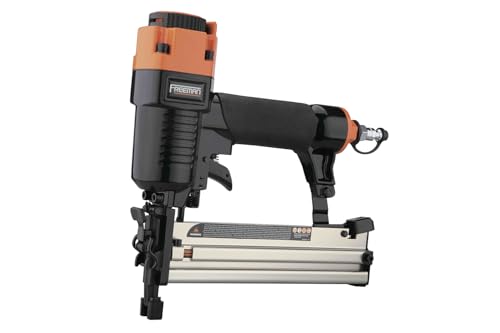
- Best for: DIYers and light professionals who want reliable trim and cabinet stapling at a mid-range price.
- 18-gauge, 1/4-inch narrow crown staples
- Staple length range 1/2 inch to 1-5/8 inches
- Dual spring magazine for consistent feeding
- Tool-free quick jam release
DIYers and light professionals who want reliable trim and cabinet stapling at a mid-range price.
Fit and finish feel a step below premium tools, and the manual gives little guidance on staple orientation and operating pressure.
The Freeman PST9040Q is the mid-range workhorse of this list, built for trim, cabinetry and cabinet backing without the premium price of the top pick. Its dual spring magazine feeds staples consistently, and the tool-free quick release opens the nose to clear jams without tools, which keeps downtime short on a long run of casing or cabinet backs. Adjustable depth control dials staples flush or countersunk by hand, and a reload indicator shows when fasteners run low. A reversible belt hook suits left- or right-handed carry, and Freeman backs the tool with a 7-year professional warranty.
NuMax S2-118G2
- Best for: DIYers and light professionals who want one affordable tool for trim nailing and stapling around the house.
- 2-in-1: 18-gauge brad nailer and narrow crown stapler
- Brad nails 3/8 inch to 2 inches; staples 1/2 inch to 1-5/8 inches
- 1/4-inch crown staples, 18-gauge
- One-piece hardened steel drive blade
DIYers and light professionals who want one affordable tool for trim nailing and stapling around the house.
The lightweight build feels less solid than heavier professional tools, and the 100-fastener magazine needs frequent reloading on long runs.
The NuMax S2-118G2 is the value pick for anyone who wants one pneumatic tool to cover both brad nailing and stapling. It drives 18-gauge brad nails from 3/8 inch to 2 inches and 18-gauge 1/4-inch crown staples from 1/2 inch to 1-5/8 inches, so it handles trim, baseboards, cabinet backing, window casing and picture frames without a second tool in the box. A one-piece hardened steel drive blade resists damage from jammed fasteners, and the tool-free depth adjustment wheel, no-mar safety tip and 360-degree adjustable exhaust cover the details that matter on finished surfaces. The reload indicator removes guesswork about remaining fasteners.
Metabo HPT N3804AB3
- Best for: Professionals who staple daily and want a light, durable tool that keeps feeding without misfires.
- 18-gauge, 1/4-inch narrow crown staples
- Staple length range 1/2 inch to 1-1/2 inches
- Magnesium body
- 2.3 pounds
Professionals who staple daily and want a light, durable tool that keeps feeding without misfires.
The depth adjustment knob is plastic with shallow indents, so it is harder to turn than a metal knob, and the air fitting does not pivot.
The Metabo HPT N3804AB3 is the professional pick for buyers who measure a stapler in thousands of staples rather than weekends. Its magnesium body keeps the tool light without giving up durability, and the external staple track shows remaining fasteners at a glance so the magazine never surprises you mid-run. It drives 18-gauge 1/4-inch crown staples from 1/2 inch to 1-1/2 inches, covering most finish carpentry and cabinet work, and it supports both sequential and bump-fire operation. Users report feeding thousands of staples without a misfire, and the 5-year warranty reflects that confidence.
Surebonder 9615A
- Best for: Upholstery work on chairs, sofas and headboards where fine-wire staples must hide in fabric.
- 22-gauge, 3/8-inch crown staples
- Staple length range 5/16 inch to 5/8 inch
- Operating pressure 60 to 100 PSI
- 100-staple magazine capacity
Upholstery work on chairs, sofas and headboards where fine-wire staples must hide in fabric.
It takes only Surebonder 300 series 22-gauge staples, so you cannot share staples with 18-gauge tools, and the instructions lack clear specifications.
The Surebonder 9615A is the specialist of this list, built for upholstery where an 18-gauge staple would crush fabric and show. Its 22-gauge wire is thinner and more flexible, so staples penetrate fabric without tearing it or overly compressing padding, and the 3/8-inch crown holds the material flat. The tool weighs around 3 pounds, which makes it easy to maneuver around curved chair backs and armrests, and its large-capacity magazine loads from the top for fast refills. A safety nose prevents firing unless the tool is pressed against the work surface, and the kit ships with a blow-molded carrying case, pneumatic oil and a wrench.
Which One Fits Your Situation
Trimming out a room or building cabinets
Pick the BOSTITCH SX1838K or the Metabo HPT N3804AB3. Both drive 18-gauge narrow crown staples that disappear into trim and cabinet backs, and both offer depth control that keeps staples flush. Choose the Bostitch if oil-free operation matters on raw wood, and choose the Metabo if you want the lighter magnesium body and the visible staple track for long production runs.
Working on a tight budget with occasional projects
Pick the NuMax S2-118G2 or the Freeman PST9040Q. The NuMax covers two jobs in one tool, driving brads as well as staples, which suits a homeowner who owns one compressor and tackles trim, baseboards and picture frames. The Freeman is the better choice if you staple more than you nail, thanks to its dual spring magazine and tool-free jam release.
Reupholstering chairs, sofas or headboards
Pick the Surebonder 9615A. Its 22-gauge fine-wire staples penetrate fabric without tearing it, and the 3/8-inch crown holds padding flat without the wide staple line an 18-gauge tool leaves. The safety nose matters here too, since upholstery work puts your free hand close to the nose. Buy Surebonder 300 series staples with the tool so the magazine and fasteners match.
Stapling all day on a job site
Pick the BOSTITCH SX1838K for oil-free running or the Metabo HPT N3804AB3 for its light magnesium body. Both handle thousands of staples without the fatigue a heavier tool causes, and both have dry-fire protection that saves the driver when the magazine empties. Keep spare staples in the carrying case, since both tools run through a 100-staple magazine quickly on production work.
Common Mistakes
- Buying the wrong crown or gauge for the job, so staples show on trim or tear upholstery fabric.
- Skipping the compressor check and discovering the tool needs more pressure or air volume than the compressor delivers.
- Using an oiled stapler on raw wood or light fabric, where oil mist leaves a stain that cannot be sanded out of a finished piece.
- Choosing staple legs that are too long, so they blow through the back of thin plywood, or too short, so they pull out under load.
- Firing the tool with an empty magazine, which can damage the driver blade when there is no dry-fire lockout.
Frequently Asked Questions
Do I need an air compressor to use a pneumatic stapler?
Yes, a pneumatic stapler runs on compressed air and needs a compressor, a hose and a fitting to work. Most models in this guide run between 60 and 100 PSI, so a small workshop compressor that holds that range covers them. Without a compressor the tool does nothing, so budget for the compressor and hose if you do not already own them.
What PSI should I run a pneumatic stapler at?
Most narrow crown and fine-wire staplers run best between 60 and 90 PSI, with softer woods at the low end and hardwoods at the high end. Start near 60 PSI on scrap material and raise the pressure until staples sit flush without blowing through. Never exceed the maximum pressure in the manual, since excess pressure can damage the tool and the workpiece.
Can an 18-gauge narrow crown stapler handle upholstery?
It can, but the thicker 18-gauge wire compresses padding and can tear light fabric, and the staple line shows more than a fine-wire staple. A 22-gauge stapler like the Surebonder 9615A is the better choice for dedicated upholstery work. If you only own an 18-gauge tool, test on scrap fabric first and keep the depth shallow.
What is the difference between sequential and contact firing?
Sequential firing drives one staple per trigger pull, which gives precise placement for trim and cabinet work. Contact firing, also called bump firing, drives a staple each time the nose touches the workpiece while the trigger is held, which speeds up long runs of stapling. Most tools in this guide offer both modes through a selectable trigger, so you can switch between precision and speed.