Our Short List of 3
- Best for: Large volumes of dry leaves processed in batches beside the pile.
- Motor: 13 amp, 120V ~ 60Hz
- Throughput: up to 53 gallons of leaves per minute
- Mulching ratio: 11:1
- Cutting system: Flex-a-Line bladeless, 0.09-inch line diameter

- Best for: Mixed damp and dry leaves, and anyone who wants the lightest unit to move around.
- Motor: 13 amp, up to 8,000 RPM
- Throughput: up to 55 gallons of leaves per minute
- Reduction ratio: 16:1
- Control: adjustable dial for wet or dry yard waste

- Best for: Compost makers and bed mulching where the finest shred matters most.
- Reduction: adjustable coarseness, up to 30:1
- Cutting system: 36 heavy-duty cutting lines
- Material: wet or dry leaves, grass, and pine needles
- Design: freestanding
All 3 Picks at a Glance
| Product | Specs | Action |
|---|---|---|
| WORX WG430 13 Amp Electric Leaf Mulcher |
| Check price on Amazon |
| Sun Joe SDJ616 Shredder Joe Electric Leaf Mulcher |
| Check price on Amazon |
| Flowtron LE-900 Electric Leaf Mulcher |
| Check price on Amazon |
Key takeaways
- Turn piles of fall leaves into fine mulch with an electric leaf mulcher. Compare motor strength, reduction ratio, and collection setups for your yard.
The real decision with a leaf mulcher is not whether it can chew leaves, but how much yard volume it turns into a single bag and how fine the result comes out. A machine with a modest reduction ratio still leaves you hauling bags all afternoon, while a higher ratio only helps if the hopper and motor keep pace with the piles your trees actually drop. Collection matters too: some units drop mulch into a bag you supply, while others sit over a trash can.
This guide is for homeowners with leaf-heavy yards, gardeners who want shredded leaves for compost and bed mulch, and anyone tired of filling bag after bag for curbside pickup. The three machines below were picked from their Amazon listings, comparing motor figures, stated throughput, reduction ratios, and the collection hardware each listing describes, so the differences you read here come from published specifications rather than guesswork.
Quick Picks
As an Amazon Associate we earn from qualifying purchases
| Product | Best for | Key spec from title |
|---|---|---|
| WORX WG430 13 Amp Electric Leaf Mulcher | Fast dry-leaf cleanup in big batches | 13-amp motor, up to 53 gallons per minute |
| Sun Joe SDJ616 Shredder Joe | Damp or dry leaves with a control dial | 16:1 reduction ratio |
| Flowtron LE-900 | The finest mulch texture for compost | Adjustable reduction up to 30:1 |
How to Choose
Reduction Ratio and What It Actually Changes
The reduction ratio tells you how much smaller the pile gets: a 16:1 machine turns sixteen bags of loose leaves into roughly one bag of mulch, at least under the conditions the maker used. This figure decides how many bags you buy, how many trips to the curb you make, and how much compost bin space the output takes up. Gardeners spreading mulch on beds often prefer a finer output, because small pieces settle between plants and break down sooner. If your town collects loose leaves for free, a modest ratio is less of a drawback than it is for someone paying per bag.
Motor Strength and Throughput
Amp figures and gallons-per-minute claims work together, and neither one tells the whole story alone. A stronger motor holds its speed when the hopper is full of damp, matted leaves, while a weaker one slows down and forces you to feed smaller handfuls. Throughput numbers come from the listing, and they describe a ceiling reached with dry, loose material rather than a promise for every load. Match the machine to your heaviest week of leaf fall, not your average one. If two or three mature trees drop at once, a higher throughput figure saves real time across a long afternoon.
Cutting Line System and Upkeep
Every machine in this roundup cuts with heavy nylon line instead of a metal blade, a design often called bladeless. Line has a genuine advantage: it flexes when it hits a stray stone or a thick stem instead of chipping, and swapping a worn length takes seconds without tools. The trade-off is that line is a consumable. It shortens as it works, faster on gritty or twiggy loads, so check how many spare lines the listing includes and how the line feeds. A machine that ships with a generous bundle of replacements keeps you shredding through the season without a separate parts order.
Collection Setup, Cord, and Storage
Where the mulch lands shapes your whole workflow. Some mulchers hang their output over a bag held in a support ring, others mount on top of a trash can you line yourself, and the collection piece is not always in the box, so read the listing before assuming. All three machines here are corded, which means your working radius is set by the outlet and the extension cord you pair with it; plan the shredding spot accordingly. Finally, look at how the unit stores. Folding legs and a compact tub matter in a crowded garage once the season ends.
The 3 Best Options
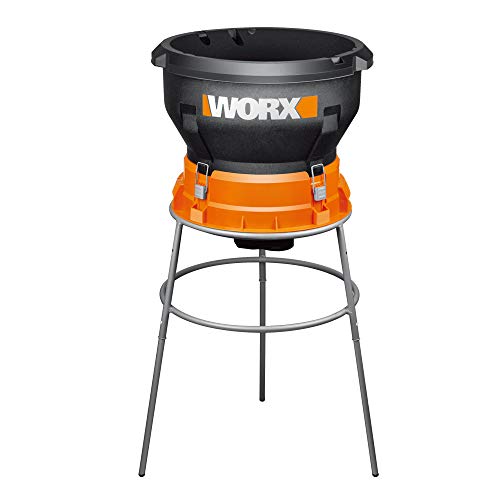
WORX WG430 13 Amp Electric Leaf Mulcher
- Best for: Large volumes of dry leaves processed in batches beside the pile.
- Motor: 13 amp, 120V ~ 60Hz
- Throughput: up to 53 gallons of leaves per minute
- Mulching ratio: 11:1
- Cutting system: Flex-a-Line bladeless, 0.09-inch line diameter
Large volumes of dry leaves processed in batches beside the pile.
The collection bag itself is not included, and the 11:1 ratio is the gentlest reduction in this group, so output stays comparatively coarse.
The WG430 suits homeowners who rake first and shred second, working through big, dry piles in one spot. Its 13-amp motor is listed at up to 53 gallons of leaves per minute, so a wheelbarrow load disappears quickly once you settle into a rhythm. The bladeless Flex-a-Line system cuts with thick trimmer line rather than a steel blade, which keeps upkeep simple and avoids damage when a small stone sneaks into the hopper. Because the whole unit folds down and weighs about twenty pounds, it stores flat against a garage wall and carries easily to wherever the piles are stacked.
Sun Joe SDJ616 Shredder Joe Electric Leaf Mulcher
- Best for: Mixed damp and dry leaves, and anyone who wants the lightest unit to move around.
- Motor: 13 amp, up to 8,000 RPM
- Throughput: up to 55 gallons of leaves per minute
- Reduction ratio: 16:1
- Control: adjustable dial for wet or dry yard waste
Mixed damp and dry leaves, and anyone who wants the lightest unit to move around.
The listed noise figure is high at 110 dB, so plan on hearing protection and considerate timing near neighbors.
The SDJ616 is the pick for yards where leaf condition changes from one weekend to the next. An adjustable control dial lets you set the shred for wet or dry material, which helps when rain has matted the pile and a fixed setting would clog or tear unevenly. Its 13-amp motor spins at up to 8,000 RPM and is listed at up to 55 gallons per minute, with a 16:1 reduction that shrinks bag counts far more than the WORX above. At 13.4 pounds it is the lightest machine here, and it mounts directly over a trash container lined with a leaf bag.
Flowtron LE-900 Electric Leaf Mulcher
- Best for: Compost makers and bed mulching where the finest shred matters most.
- Reduction: adjustable coarseness, up to 30:1
- Cutting system: 36 heavy-duty cutting lines
- Material: wet or dry leaves, grass, and pine needles
- Design: freestanding
Compost makers and bed mulching where the finest shred matters most.
The warranty is a limited one year, shorter than the Sun Joe cover, and fine settings slow the feed rate on bulky loads.
The LE-900 is built for gardeners who shred leaves mainly to feed compost piles and mulch beds, where texture matters more than raw speed. Its adjustable coarseness setting takes reduction up to 30:1, the finest figure in this group, so output can come out close to a crumbly leaf mold that settles into beds and breaks down quickly. The freestanding design works with wet or dry leaves, grass, and pine needles, which widens its usefulness beyond a single fall weekend. Thirty-six heavy-duty cutting lines do the work, and the unit weighs 17 pounds, light enough to carry to the pile.
Which One Fits Your Situation
You Face a Heavy Drop From Several Mature Trees
When two or three big trees let go in the same week, throughput decides whether you finish on Saturday or spill into a second weekend. The WORX WG430 is the natural fit here, with its listed 53 gallons per minute and a hopper workflow built around feeding pile after pile in one place. Its coarser 11:1 output is a fair trade when the goal is clearing volume fast, and the fold-flat body stores easily once the trees are bare.
Your Leaves Are Often Damp When You Get to Them
Weekend schedules and autumn rain rarely cooperate, so many piles sit wet before shredding day arrives. The Sun Joe SDJ616 handles that reality best, because its control dial adjusts for wet or dry material instead of forcing one setting on every load. The 16:1 reduction still keeps bag counts down, and the light frame makes it easy to drag the setup close to wherever the damp piles are waiting.
You Shred Mainly for Compost and Garden Beds
If the output is headed for a compost bin or straight onto planting beds, texture outranks speed. The Flowtron LE-900 earns this spot with adjustable coarseness up to a 30:1 reduction, producing the finest mulch in the group, the kind that layers neatly around plants and breaks down sooner. It also takes grass and pine needles, so spring cleanups feed the same pile instead of a separate one.
Storage Space Is Tight and You Move the Machine Often
Apartment-style garages and small sheds punish bulky yard tools. The Sun Joe SDJ616 is the easiest of the three to live with here: at 13.4 pounds it carries one-handed, and it works perched on the trash container you already own rather than demanding floor space of its own. When the season ends, it tucks onto a shelf instead of claiming a corner until spring.
Common Mistakes
- Feeding branches and thick twigs into a leaf mulcher built around nylon line, which shortens the line fast and can stall the motor.
- Choosing on reduction ratio alone while ignoring throughput, then discovering a fine-cutting machine takes all day on a big yard.
- Assuming a collection bag or container is in the box when the listing sells the machine on its own.
- Running damp, matted leaves on a dry setting or stuffing the hopper past a steady feed, which causes clogs and uneven output.
- Forgetting that a corded mulcher only works within reach of an outlet, and pairing it with an extension cord that is too light for the motor draw.
Frequently Asked Questions
Can an electric leaf mulcher handle wet leaves?
Yes, within limits. Listings for machines like the Sun Joe SDJ616 describe settings for wet or dry material, and the Flowtron LE-900 is listed for wet or dry leaves as well. Damp leaves feed more slowly and can clump, so smaller handfuls and the wet setting give a cleaner result than forcing a full hopper through at once.
Do these machines shred branches too?
No. All three machines here are leaf mulchers that cut with nylon line, and their listings aim them at leaves, with the Flowtron also taking grass and pine needles. Woody branches belong in a chipper shredder with a steel cutting mechanism and a stated branch capacity. Feeding sticks into a line system mainly wears the line out faster.
What does a 16:1 or 30:1 reduction ratio mean in practice?
It describes how much the volume shrinks: at 16:1, sixteen bags of loose leaves become about one bag of mulch, and a 30:1 setting shrinks the pile further still. Higher ratios also mean finer pieces, which suit compost and bed mulch. The figures are maker claims under their own conditions, so treat them as comparisons between models rather than guarantees.
What else do I need besides the mulcher itself?
Plan on a collection bag or a trash container to catch the output, since not every listing includes one, plus an outdoor extension cord suited to the motor draw. Replacement cutting lines are the main consumable, so check how many spares the box holds. Eye and hearing protection are worth adding, because shredding dry leaves is dusty and loud work.