We independently review everything we recommend. When you buy through our links, we may earn a commission. As an Amazon Associate we earn from qualifying purchases.
Best Budget CPU Air Coolers for Cool and Quiet Builds
Compare the best budget CPU air coolers for desktop builds, from compact single towers to a dual-tower flagship design, with socket support explained.
The stock cooler bundled with many processors, or the aging one already in your case, often leaves performance on the table: chips run hotter, boost clocks drop sooner, and the small fan gets loud doing it. A budget tower air cooler fixes all three problems with a stack of fins, a few heat pipes, and a full-size 120 mm fan, and it does so for less than most other upgrades. This guide compares five affordable air coolers for Intel and AMD builds, from a dual-tower design with flagship-level hardware to slim single towers that fit almost any case.
As an Amazon Associate, we earn from qualifying purchases.
Quick answer
The Thermalright Peerless Assassin 120 SE is the strongest budget air cooler here, with a dual-tower heatsink and two fans. The Cooler Master Hyper 212 Black is the proven all-rounder, the Thermalright Assassin X120 Refined SE covers mid-range chips quietly, the Id-Cooling SE-214-XT Black is the compact value pick, and the Vetroo V5E adds ARGB lighting for showcase builds.
The Peerless Assassin 120 SE is the cooler that reset expectations for budget air cooling. It uses a dual-tower heatsink with six 6 mm heat pipes running through both fin stacks, cooled by two TL-C12C 120 mm PWM fans rated at 66.17 CFM each and up to 25.6 dBA. That is hardware you would normally associate with coolers in a higher price class, and it gives the Assassin the thermal headroom to handle high-core-count processors and sustained all-core workloads without the fans spinning up aggressively. The nickel-plated copper base uses Thermalright’s AGHP heat pipe technology, designed to keep performance consistent whether the motherboard sits vertically in a tower or horizontally in a test bench. Height is the main planning point: at 155 mm tall, it needs a case with generous cooler clearance, and the front fan may need to slide up to clear tall memory modules, which adds a few millimeters more. Mounting hardware covers Intel LGA1700, LGA1200, and LGA115x sockets plus AMD AM4 and AM5, and the fans use standard 4-pin PWM connectors with a splitter included. For builders who want the most cooling per dollar and have the case space to fit it, this is the default recommendation.
The Hyper 212 line has been the default budget cooler recommendation for over a decade, and the Black edition is its most refined mainstream version. It uses a single tower with four direct-contact heat pipes and a blackened finish with a brushed aluminum top cover, which makes it look at home in windowed cases where the older silver versions stood out. The included Silencio FP120 fan is tuned for quiet operation, using a rifle bearing and a PWM range that keeps it near-silent at idle while still moving enough air under load. At 152 mm tall it fits in the large majority of mid-tower cases, and the slim tower leaves all four memory slots accessible on most boards, which is a practical advantage over wider dual-tower designs. Cooling capacity suits mainstream processors comfortably: mid-range Intel Core and AMD Ryzen chips, including the popular 65-watt classes and most of their higher-power siblings at stock settings. The mounting system covers Intel LGA1700 and AMD AM4 and AM5 with the current bracket kit. It is not the strongest cooler in this roundup, and heavy overclocking is beyond its brief, but as a quiet, good-looking, easy-to-install step up from a stock cooler, the Hyper 212 Black remains easy to recommend.
The Assassin X120 Refined SE is Thermalright’s single-tower answer for builders who do not need dual-tower cooling power. Four AGHP heat pipes feed a compact fin stack, and a single TL-C12C 120 mm PWM fan, rated at 66.17 CFM and up to 25.6 dBA, does the cooling. At 148 mm tall, it clears the side panel in many cases that cannot take the Peerless Assassin, and its narrow profile avoids the memory clearance juggling that wider coolers require, so all RAM slots stay usable even with tall heat spreaders. Performance lands exactly where the design suggests: mainstream Ryzen and Core processors run cool and quiet, including gaming loads and long compile or render sessions at stock settings, while the very hottest flagship chips under full all-core load will push it harder. The Refined SE revision tidied up the mounting hardware and top plate, and brackets are included for Intel LGA1700, LGA1200, and LGA115x along with AMD AM4 and AM5. A tube of thermal paste is in the box, as with the other Thermalright coolers here. For a mid-range gaming build that values quiet manners and an easy install over maximum headroom, the Assassin X120 Refined SE is the balanced pick.
The SE-214-XT Black is the value anchor of this roundup, a compact single-tower cooler that undercuts the big names while keeping the features that matter. It uses four heat pipes in a direct-touch base, a tower of aluminum fins, and a 120 mm PWM fan, and Id-Cooling rates the design at 180 watts of TDP, which covers the mainstream processor range with room to spare. The all-black treatment, including a covered top plate, gives it a cleaner look than most coolers at this level, where exposed heat pipe tips are the norm. Its compact footprint is the real selling point: the tower is offset and slim, so it stays clear of memory slots and the top PCIe slot on crowded micro-ATX boards, and its modest height suits smaller cases that rule out the bigger towers here. Mounting kits cover modern Intel and AMD sockets, including LGA1700 and AM5, which is not always a given at this price. Under gaming loads it keeps mid-range chips at sensible temperatures with restrained fan noise, though the fan will be audible when a high-power processor runs at full load for long stretches. For a first build or a budget gaming PC, the SE-214-XT Black delivers the essentials at the lowest cost in this group.
The Vetroo V5E is the pick for builders who want their cooler to be seen as well as felt. It builds on the well-known V5 design with five heat pipes, a brushed-finish top cover, and a 120 mm fan with ARGB lighting that syncs with a motherboard’s 3-pin ARGB header, so the cooler joins the rest of a build’s lighting scheme instead of clashing with it. The fan uses a fluid dynamic bearing, which suits a showcase build because FDB fans are built for long, quiet service. Cooling performance is aimed at the mainstream: five heat pipes and a full-size tower give it comfortable headroom over stock coolers for mid-range Intel and AMD processors in gaming and everyday workloads. The mounting kit supports Intel LGA1700 and earlier sockets plus AMD AM4 and AM5, and the tower’s proportions keep memory clearance workable on most boards, though very tall RGB memory under the fan side is worth a measurement before ordering. Where the other coolers in this roundup compete purely on temperatures and noise, the V5E adds presentation to the brief. If your case has a window and your build has a lighting theme, it is the natural fit among these five.
How to choose
Check three measurements before anything else: your case’s maximum cooler height, the distance from the socket to your memory slots, and the socket itself. A cooler that is 155 mm tall is useless in a case rated for 150 mm, and wide towers can hang over the first RAM slot, which matters if you use tall memory. Next, match the cooler to your processor’s heat output. Mainstream 65-watt-class chips are easy work for any single tower here, while high-core-count processors running long all-core loads justify the dual-tower Peerless Assassin. Heat pipe count and fan size are useful shorthand: four to six pipes and a 120 mm fan is the sweet spot for quiet cooling, and PWM control lets the motherboard slow the fan at idle. Noise ratings around 26 dBA suggest a cooler that will stay in the background during desktop work. Finally, confirm the mounting kit lists your exact socket, especially LGA1700 and AM5 on newer builds, and remember that every cooler here needs thermal paste, which is included in the box with all five picks.
Who should skip
Skip a budget air cooler if your processor already runs cool and quiet on its bundled cooler and you never hear it; there is nothing to fix, and the money serves better elsewhere in the build. Skip these towers if your case is a small form factor build with strict height limits, since low-profile top-down coolers exist specifically for that space. Skip air cooling entirely if you plan heavy, sustained overclocking on a flagship processor, where a large liquid cooler is the appropriate tool. And skip the upgrade if your real problem is case airflow: one intake and one exhaust fan will often do more for temperatures than a bigger CPU cooler blowing hot case air across its fins.
Frequently Asked Questions
How do I know if a CPU cooler will fit my case?
Check the case maker’s stated maximum CPU cooler height and compare it with the cooler’s height, leaving a few millimeters of margin. Also check memory clearance: wide towers can overhang the first RAM slot, so measure your memory height or choose a slim tower design. Socket compatibility is listed on both the cooler and motherboard specifications.
Is a tower air cooler better than the stock cooler?
For most processors, yes. A tower cooler has far more fin area and a larger, slower fan than a stock cooler, so the chip runs cooler and quieter, and boost clocks hold longer under load. The difference is largest on higher-power processors and smallest on low-power chips that barely stress a stock cooler in the first place.
Do these coolers come with thermal paste?
Yes, all five coolers in this guide include thermal paste in the box, either as a small tube or a pre-applied layer on the base. A pea-sized amount in the center of the processor’s heat spreader is enough for most sockets. You only need a separate tube if you plan to remount the cooler several times.
Can a budget air cooler handle a high-end processor?
It depends on the cooler and the workload. The dual-tower Peerless Assassin 120 SE handles high-end chips at stock settings comfortably. Smaller single towers can run the same chips for gaming, but under long all-core rendering loads they will run hotter and louder. For sustained heavy overclocking, a larger cooler or liquid cooling is the better tool.
Final verdict
The Peerless Assassin 120 SE offers the most cooling here and is the first choice when your case can fit it. The Hyper 212 Black remains the polished all-rounder, the Assassin X120 Refined SE balances size, quiet, and price for mid-range builds, the SE-214-XT Black is the compact value option, and the Vetroo V5E serves windowed builds that want ARGB lighting. Measure your case, match the cooler to your processor, and any of these five will be a clear step up from a stock cooler.
E
Emubox Editorial Team
We compare specs, materials and verified owner reviews before a product earns a spot. Rankings are never paid.
Affiliate disclosure. As an Amazon Associate we earn from qualifying purchases at no extra cost to you. Prices accurate as of the date shown.
Best 2mm 70 cm portable antennas compared: telescopic radio antennas near 70 cm, with connectors, bands and collapsed sizes explained before you buy today.
Find the best thermostat setting for winter and summer, with energy-saving setbacks, humidity tips, and smart schedules for a comfortable home year-round.
The best affordable business computer monitors balance sharp text, eye comfort and lasting value. Compare four reliable office displays built for long workdays.
Looking for the best inexpensive HD TVs non smart? Compare five genuinely non-smart HD televisions with tuners, HDMI inputs and simple setup for any small room.

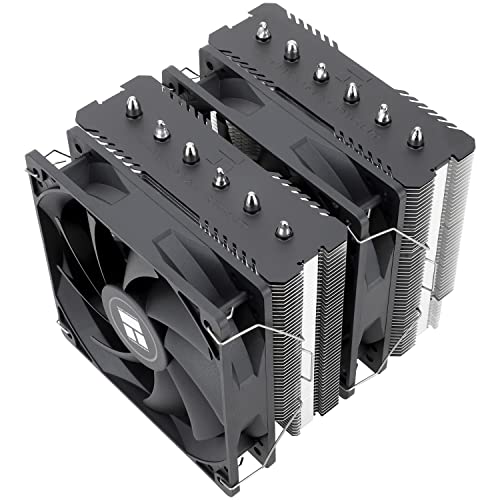 Thermalright Peerless Assassin 120 SE
 Cooler Master Hyper 212 Black
 Thermalright Assassin X120 Refined SE
 Id-Cooling SE-214-XT Black
 Vetroo V5E CPU Air Cooler









