Our Short List of 3

- Best for: Hunters running heavier bolt setups who want the widest two-blade cut.
- Grain weight: 125 grain (this listing)
- Blade design: 2-blade mechanical, rear-deploying
- Cutting diameter: 2 inches
- Blade thickness: .035 inch stainless steel

- Best for: Hunters who want a steel-ferrule mechanical with no collars to replace.
- Grain weight: 100 grain (this listing)
- Blade design: 2-blade mechanical
- Cutting diameter: 2 inches
- Blade thickness: .035 inch, swept-back angled blades
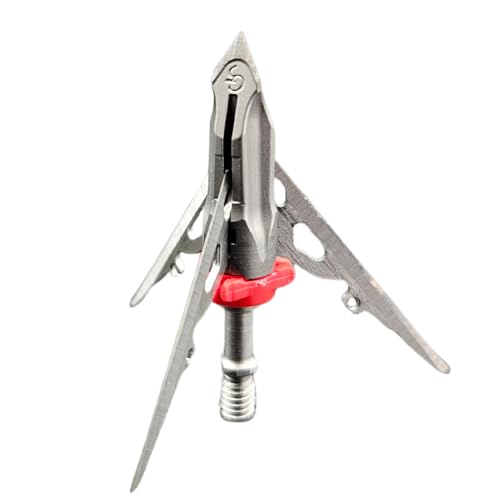
- Best for: Hunters who prefer three cutting planes for quartering shots on deer.
- Grain weight: 100 grain (this listing)
- Blade design: 3-blade mechanical
- Cutting diameter: 2 inches
- Tip: Chisel tip
All 5 Picks at a Glance
| Product | Specs | Action |
|---|---|---|
| Rage Crossbow X 125 Grain Broadhead, 3-Pack |
| Check price on Amazon |
| Rage Hypodermic Crossbow NC 100 Grain Broadhead, 3-Count |
| Check price on Amazon |
| G5 Megameat Crossbow 100 Grain Broadhead, 3-Pack |
| Check price on Amazon |
 Muzzy Trocar HBX Hybrid 100 Grain Broadhead |
| Check price on Amazon |
 Swhacker #207 100 Grain Broadhead, Set of 3 |
| Check price on Amazon |
Key takeaways
- Five crossbow broadheads for deer compared by grain weight, blade design, retention and cut, with the listing specs that matter for a clean, quick harvest.
A broadhead choice for a deer crossbow comes down to three linked calls: how the head flies at crossbow speed, how it opens or cuts on impact, and whether its grain weight matches the bolts your bow was set up around. Pick wrong on any one of them and a well-placed shot can still end in a long, uncertain track through the woods.
This guide is for crossbow deer hunters, from a first season on a mid-speed bow to owners of fast flagship models. The five heads below were chosen from crossbow-specific listings on Amazon: two-blade mechanicals, a three-blade mechanical, a hybrid and a two-stage design, in 100 or 125 grain three-packs. Every head here is sold for crossbow use and built around the bolt weights most factory crossbow packages ship with today.
Quick Picks
As an Amazon Associate we earn from qualifying purchases.
| Product | Best for | Key spec from title |
|---|---|---|
| Rage Crossbow X 125 Grain | Heavy bolts and maximum cut | 2-blade, 2-inch cut, 3-pack |
| Rage Hypodermic Crossbow NC 100 Grain | Penetration with no collars to manage | Machined stainless ferrule, 2-inch cut |
| G5 Megameat Crossbow 100 Grain | Three-blade wound channels | 3-blade, 2-inch cut, SnapLock collar |
| Muzzy Trocar HBX Hybrid 100 Grain | Cutting from first contact | 1-inch fixed plus 1 5/8-inch expandable blades |
| Swhacker #207 100 Grain | Entry hole plus internal cut | Two-stage blades, 2-inch main cut |
How to Choose
Match Grain Weight to Your Bolt Setup
Most crossbow bolts leave the factory matched to a 100 grain head, and that figure is the safe default for deer. Moving to 125 grain adds weight up front, which can steady flight and help momentum on longer shots, but it also changes impact point and can soften speed. Whichever weight you hunt with, practice with field points of the same weight, then confirm with one actual broadhead before the season. A head that groups apart from your practice points is a head to leave at home, whatever its cutting diameter promises on the package.
Blade Design and Cutting Diameter
Two-blade mechanicals open the widest single cut, usually two inches, and put all of that width into one plane. Three-blade heads cut in three planes at once, which many hunters credit for stronger blood trails on quartering shots. Hybrids add a small fixed blade that cuts from the first touch, before the mechanical blades deploy. Fixed crossbow heads cut the narrowest path but never depend on deployment. For deer, any of these designs works when it is sharp and well placed; the real split is how much you trust moving parts at your bow’s speed.
Retention System and Crossbow Speed
A mechanical head is only useful if its blades stay shut in flight and open on the deer. Crossbows launch bolts harder than vertical bows, so retention matters more here: shock collars, snap-lock collars and built-in blade locks all exist to keep blades closed until impact. If your bow shoots over 400 feet per second, favor heads whose listings name a crossbow-specific retention system, and check that any collar is seated correctly before every hunt. A blade that opens in flight will pull the bolt off course no matter how good the sight picture looked.
Ferrule Build and Blade Replacement
The ferrule takes the first hit against hide, rib and sometimes shoulder, so its material decides whether a head survives a pass-through straight. Machined stainless steel ferrules shrug off contact that can bend a thin aluminum body, while aluminum keeps weight down and flies flatter. Replaceable blades matter just as much over a season: a head you can rebuild with fresh blades after a shot stays consistent, while a one-and-done head quietly loses its edge. Check that replacement blades and collars for your model are easy to find before committing to it.
The 5 Best Options
Rage Crossbow X 125 Grain Broadhead, 3-Pack
- Best for: Hunters running heavier bolt setups who want the widest two-blade cut.
- Grain weight: 125 grain (this listing)
- Blade design: 2-blade mechanical, rear-deploying
- Cutting diameter: 2 inches
- Blade thickness: .035 inch stainless steel
Hunters running heavier bolt setups who want the widest two-blade cut.
Shock collars are single-use items in practice; carry spares and reseat blades carefully after any handling.
The Crossbow X is the heavyweight option in this set, and it suits hunters who run heavier bolts or simply want more weight up front for momentum on quartering shots. Its two rear-deploying blades open to a full two-inch cut, held shut in flight by a shock collar, and the aluminum ferrule uses an alignment design meant to keep the head tracking straight behind the bolt. For deer at woods ranges, that mix of mass and cut width is the argument: a broad wound channel with enough weight behind it to keep pushing through.
Rage Hypodermic Crossbow NC 100 Grain Broadhead, 3-Count
- Best for: Hunters who want a steel-ferrule mechanical with no collars to replace.
- Grain weight: 100 grain (this listing)
- Blade design: 2-blade mechanical
- Cutting diameter: 2 inches
- Blade thickness: .035 inch, swept-back angled blades
Hunters who want a steel-ferrule mechanical with no collars to replace.
The no-collar lock still needs a firm check before loading; a blade nudged loose in the quiver will not reseat itself.
The NC version of the Hypodermic removes the collar from the equation entirely, locking its blades with a built-in mechanism inside the head. That makes it a tidy pick for hunters who dislike fiddling with small parts in the dark before a morning sit. The ferrule is machined stainless steel rather than aluminum, and the slim hypodermic tip is shaped to slip through hide with little resistance before the swept-back blades open to two inches. For a standard 100 grain bolt setup on a modern crossbow, this is the penetration-first mechanical in the group.
G5 Megameat Crossbow 100 Grain Broadhead, 3-Pack
- Best for: Hunters who prefer three cutting planes for quartering shots on deer.
- Grain weight: 100 grain (this listing)
- Blade design: 3-blade mechanical
- Cutting diameter: 2 inches
- Tip: Chisel tip
Hunters who prefer three cutting planes for quartering shots on deer.
The crossbow version uses its own collars; the standard Megameat collars are a different part, so order the right ones.
The Megameat is the three-blade entry here, built in a crossbow-specific version with a collar system tuned for harder launches. Three blades opening to a two-inch cut give it cutting edges in three planes, which is the design hunters reach for when they expect quartering angles and want more than one wound channel direction. The chisel tip is made to push through bone contact rather than glance off it, and the blades are replaceable, so a head that survives a shot can be rebuilt instead of retired.
Muzzy Trocar HBX Hybrid 100 Grain Broadhead
- Best for: Hunters who want fixed-blade certainty with mechanical width behind it.
- Grain weight: 100 grain (this listing)
- Blade design: 4-blade hybrid, 2 fixed and 2 mechanical
- Fixed blade cut: 1 inch
- Expandable cut: 1 5/8 inches
Hunters who want fixed-blade certainty with mechanical width behind it.
The fixed blades are always exposed, so use a broadhead case or wrench for handling and keep them clear of your bowstring.
The Trocar HBX hedges the mechanical bet: two fixed blades cut a one-inch path from the moment of contact, while two mechanical blades swing out behind them to a 1 5/8-inch cut, for a combined 2 5/8 inches of total cutting width on the listing. If a mechanical blade ever underperforms, the fixed pair has already done its work, which is exactly the comfort this design sells. The solid steel ferrule and chisel tip suit hunters who expect rib or shoulder contact and would rather have mass and simplicity up front than the widest possible single cut.
Swhacker #207 100 Grain Broadhead, Set of 3
- Best for: Hunters who like the idea of fresh main blades opening inside the cavity.
- Grain weight: 100 grain (this listing)
- Blade design: 2-blade mechanical, two-stage opening
- Cutting diameter: 2 inches (main blades)
- Wing blades: 1 inch cut in flight and on entry
Hunters who like the idea of fresh main blades opening inside the cavity.
The two-stage opening asks for adequate energy; on lower-powered crossbows at longer range, simpler heads are the safer call.
The Swhacker takes a two-stage route that no other head here copies. Small wing blades open first and cut the entry hole, and the main blades stay closed until they are inside the body cavity, then open to a full two-inch cut where they meet no hide or hair resistance. Fans of the design say the protected main blades stay sharper for the internal cut. The ferrule is aircraft-grade aluminum with a hardened tip, and the listing covers both compound bows and crossbows, so confirm your bolt setup groups with it before hunting.
Which One Fits Your Situation
Your First Crossbow Season
Begin with the grain weight your bolts came with, which is 100 grain for most factory setups, and pick a head with simple upkeep. The Hypodermic Crossbow NC removes collar management from the routine, and the Megameat Crossbow adds a third blade for margin on imperfect angles. Spend the saved complexity on practice: shoot one hunting head at a target before opening day and confirm it lands with your field points.
A Flagship Bow Shooting Over 400 FPS
Hard launches punish weak retention, so the retention system becomes the deciding spec. The Crossbow X pairs its shock collar with a ferrule alignment design aimed at fast bolts, and the Megameat Crossbow uses a collar built for crossbow launches. Inspect collars before every sit, replace any that look stressed, and keep a spare pack in your kit so a damaged collar never tempts you into a risky shot.
Close Shots From a Ground Blind
Most blind shots on deer happen inside 25 yards, where penetration is plentiful and a wide cut does the work. The Crossbow X in 125 grain and the Megameat both open to two inches, giving a broad channel on broadside angles. The heavier Crossbow X also quiets the urge to reach for distance: set up for the close shot, and let the cut width shorten the track afterward.
Shots Where Bone Contact Is Likely
If your stands overlook thick cover where deer rarely offer a clean broadside, build the setup around the ferrule. The Trocar HBX cuts with fixed blades from first contact and carries a solid steel ferrule, while the Hypodermic NC’s machined steel body is the other toughness-first pick. Either way, keep ranges honest, since no ferrule makes a poor angle into a good one.
Common Mistakes
- Practicing with 100 grain field points, then hunting with a 125 grain head without re-checking where the bolt lands.
- Loading a mechanical head that is not built for crossbow launch forces, so a blade opens in flight and pulls the shot wide.
- Skipping a confirmation shot with an actual broadhead, assuming it must group with field points because the weights match.
- Reusing a mechanical head after a shot without checking blade sharpness, blade play and collar condition.
- Forgetting that some seasons or areas restrict mechanical or barbed broadheads, and finding out after the tag is filled.
Frequently Asked Questions
Can I use a regular bow broadhead on a crossbow?
Some heads carry a listing for both bow types, like the Swhacker in this guide, but many vertical-bow mechanicals use retention that a crossbow launch can defeat. Match the head to a listing that names crossbow use, confirm your bolt weight suits its grain, and fire one practice shot before trusting it on a deer.
Should I pick 100 or 125 grain for deer?
Choose the weight your bolts and field points already use, which is 100 grain for most factory crossbow packages. Move to 125 grain only as a deliberate change, for heavier bolts or more weight up front, and re-sight afterward. Either weight takes deer cleanly when the head is sharp and the shot is placed well.
Do mechanical broadheads open reliably from a crossbow?
Crossbow-specific mechanicals are built for the harder launch, with collars or internal locks holding blades shut until impact. Reliability still depends on upkeep: seat the collar correctly, keep blades free of dirt, and retire any head that has been shot into a target or the ground. When in doubt, a hybrid with fixed blades removes the question.
Can I reuse a broadhead after it takes a deer?
Often yes, if the ferrule is straight and undamaged. Spin the head on a flat surface to check for wobble, replace the blades or fit new ones where the model allows it, and fit a fresh collar on collar-retained heads. A bent ferrule or cracked blade seat means the head is done, however well it flew.