Our Short List of 3
All 3 Picks at a Glance
| Product | Specs | Action |
|---|---|---|
 Bingfu 7 Sections Telescopic 74 cm AM FM Antenna (2-Pack) | Check price on Amazon | |
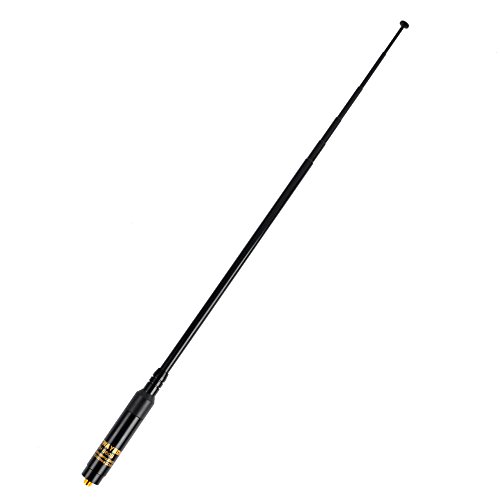 TWAYRDIO RH 660S SMA Female Telescopic Antenna | Check price on Amazon | |
 Bingfu 20-1300 MHz Magnetic Base Scanner Antenna | Check price on Amazon |
Key takeaways
- Best 2mm 70 cm portable antennas compared: telescopic radio antennas near 70 cm, with connectors, bands and collapsed sizes explained before you buy today.
Introduction
The best 2mm 70 cm portable antennas are compact telescopic whips built for listeners and handheld radio users who want better reception without carrying a full-size aerial. The keyword itself reads like a parts-bin specification rather than a brand name: a slim mast around 2 mm at the tip or mounting point, an extended length near 70 cm, and a design meant to travel. In practice, that description points at two overlapping families of antennas. One is the replacement telescopic whip for portable and tabletop radios, which screws into a small mounting hole and extends to roughly 70 cm. The other is the dual-band handheld antenna for the 2-metre and 70-centimetre amateur bands, where “70 cm” names a frequency band rather than a physical length.
This guide covers both readings, because a buyer searching this exact phrase could mean either one. Every antenna below is a portable design that collapses or packs down small, extends to a useful working length, and connects to a radio, receiver or scanner without tools or a permanent installation. The picks span AM and FM broadcast listening, VHF and UHF handheld ham radio, and wideband scanner monitoring, so the right choice depends mostly on what your radio receives and which connector it uses.
At a Glance
| Product | Best for | Key spec |
|---|---|---|
| Bingfu 7 Sections Telescopic 74 cm AM FM Antenna (2-Pack) | Replacing a broken radio aerial | Extends 15 cm to 74 cm, 75 ohm, 2-pack |
| TWAYRDIO RH 660S SMA Female Telescopic Antenna | Handheld ham radio on 2 m and 70 cm | 28 cm collapsed, 109 cm extended, 144/430 MHz |
| Bingfu 20-1300 MHz Magnetic Base Scanner Antenna | Scanner listening at home or in a vehicle | 20-1300 MHz, 47 cm whip, 3 m cable, BNC male |
How to Choose a Portable Antenna in the 70 cm Size Class
Match the connector first. An antenna is useless if it cannot attach to your radio. Replacement telescopic whips for portable radios usually screw into a small threaded mounting hole, while handheld ham radios use SMA male or SMA female connectors, and scanners commonly use BNC. The three picks in this guide cover the common cases, but connector names are easy to confuse: SMA male and SMA female look similar at a glance and are not interchangeable. Check your radio manual or the connector on the aerial you are replacing, and confirm the listing names the same connector before you buy.
Decide what “70 cm” means for you. If you want a physical length near 70 cm, look at the extended length in the specifications and compare it with the collapsed length. A whip that extends to 74 cm and collapses to 15 cm fits in a jacket pocket and still gives a portable radio a much longer aerial than a stubby stock whip. If you work the amateur bands, “70 cm” usually means the 430 MHz UHF band, and the antenna length matters less than its tuning: a dual-band telescopic antenna is designed to work on both 144 MHz and 430 MHz, and extending it fully suits the lower band while a shorter extension suits the higher one.
Check the frequency range against your listening habits. An AM and FM replacement whip is tuned for broadcast reception and will not transmit on ham bands. A wideband scanner antenna covering 20 MHz to 1300 MHz is built for receiving across many services, from airband to public safety, but it is a receiving antenna and a poor choice for transmitting. A dual-band ham antenna is designed for both receiving and transmitting on its two bands. Buying an antenna outside its intended frequency range is the most common disappointment in this category, so read the listed range rather than assuming any long metal rod will do the job.
Weigh collapsed size against extended performance. Portable antennas are a compromise by design. A longer extended length generally pulls in weaker signals, especially on lower frequencies, but a longer whip is also easier to bend, snap or catch on a bag strap. Telescopic sections solve part of this problem by collapsing down for transport, yet each joint is a potential weak point. If the antenna will live in a backpack or a go bag, a model that collapses to under 30 cm is far more practical than one that stays long. If it will sit on a shelf next to a receiver, collapsed size matters much less.
Look at the mounting style and the cable, if any. A screw-in whip attaches directly to the radio and adds no extra parts. A magnetic-base antenna needs a flat metal surface, such as a car roof or a filing cabinet, and brings a length of coaxial cable between the base and the radio. That cable is a real advantage indoors, because it lets you place the aerial near a window while the scanner sits on a desk, but it is also one more thing to coil and carry. For vehicle use, a magnetic base is quick to fit and remove; for a handheld radio carried on foot, a direct screw-in whip is simpler.
Treat gain figures with care. Manufacturers list gain in dBi, and a higher number sounds better, but gain figures for small portable antennas depend on how they were measured, and a telescopic whip only achieves its stated gain when extended to the right length and held vertically. A realistic expectation is a clear improvement over a short stock aerial on the bands the antenna is designed for, not a transformation of a weak-signal location into a strong one.
Product Reviews
Bingfu 7 Sections Telescopic 74 cm AM FM Antenna (2-Pack)
The Bingfu 7 Sections Telescopic antenna is the closest match in this guide to the literal wording of the keyword. Each stainless steel whip extends from 15 cm to 74 cm across seven telescopic sections, which puts it squarely in the 70 cm size class, and it fits a 2.5 mm mounting hole, which is the small-hole fitting the “2 mm” part of the keyword appears to describe. It is sold as a two-pack, so one purchase covers two radios or leaves a spare when a whip eventually bends or snaps.
The listed specifications are straightforward: 75 ohm impedance, a net weight of 68 g per antenna, and an operating temperature range of minus 20 degrees Celsius to plus 80 degrees Celsius. Compatibility is broad across indoor portable radios, home stereo receivers, AV receivers, TV tuners and GSM alarm systems, which makes it a general replacement aerial rather than a model-specific part. Installation is a matter of screwing the whip into the mounting hole; no adapter or cable is involved, and the collapsed 15 cm length means it can stay attached to a portable radio in a bag without sticking out.
Its strengths are simplicity and value. Two antennas for two devices, a familiar telescopic action, and a stainless steel build that resists corrosion cover the most common replacement scenario: a radio whose original aerial broke off or lost sections. The main limitation is scope. This is a receive-only replacement whip for broadcast and general FM use, not a transmitting antenna for ham radio, and its performance depends on the receiver it is attached to. The 2.5 mm mounting hole also deserves a check: if your radio uses a different fitting, this whip will not screw in.
Pros:
– Extends to 74 cm, close to the 70 cm size in the keyword
– Two-pack covers two radios or provides a spare
– Lightweight stainless steel telescopic design
– Fits many portable radios, receivers and TV tuners
Cons:
– Receive-only replacement whip, not for transmitting
– Mounting hole size must match your radio
– No cable or base, so placement is limited to the radio itself
TWAYRDIO RH 660S SMA Female Telescopic Antenna
The TWAYRDIO RH 660S is the pick for handheld ham radio, and it is also the product that explains the other reading of “70 cm”: it is a dual-band telescopic antenna for the 2-metre and 70-centimetre bands, operating on 144 MHz and 430 MHz. It uses an SMA female connector and is listed as compatible with Baofeng models including the UV-5R series, BF-F8HP and UV-82, as well as Kenwood and other handhelds that take an SMA female aerial. The same model is also available with BNC and SMA male connectors, so confirming the connector variant before ordering is essential.
The specifications suit portable field use. The antenna collapses to about 28 cm and extends to about 109 cm across six sections, with listed gain of 3.0 dBi on 144 MHz and 5.5 dBi on 430 MHz, a maximum power rating of 10 W, and a voltage standing wave ratio of 1.5. Its item weight is listed at 2.08 ounces, and the package contains a single antenna. Independent coverage of this model by an amateur radio reviewer notes the slimmer design compared with its predecessor, with no tuning lump in the middle of the radiating element, and describes it as a good compact antenna for portable use, including Summits on the Air activity.
That field-use framing is the right way to judge it. Extended, this is a long antenna for a handheld radio, and its length is both its advantage and its weakness: it reaches further and hears more, but it needs care in handling, since a long thin whip can snag, bend or put leverage on the radio socket. Collapsed to 28 cm it packs down well for a backpack or go bag. The main limitations are that it is a single-band-pair design, so it is not a general scanner aerial, and that its stated gain applies when it is extended and used on its designed bands. For a Baofeng or similar handheld owner who wants more range on local repeaters or simplex contacts, it is a direct and inexpensive upgrade.
Pros:
– Dual-band 144/430 MHz coverage for 2 m and 70 cm operation
– Collapses to about 28 cm for transport
– Listed 3.0/5.5 dBi gain and 10 W power handling
– Independently reviewed as a capable portable field antenna
Cons:
– Long when extended, so it needs careful handling
– SMA female only in this listing; other connector variants are separate listings
– Single antenna in the package, no spare included
Bingfu 20-1300 MHz Magnetic Base Scanner Antenna
The Bingfu magnetic base scanner antenna takes a different approach to portability: instead of screwing directly onto a radio, it sits on any flat metal surface and connects through a cable. It covers 20 MHz to 1300 MHz, which spans HF, VHF and UHF scanner listening, and it is listed as compatible with Uniden Bearcat, Whistler and RadioShack scanners, as well as amateur and two-way radios. That wide coverage makes it the most versatile receiving option in this guide, suited to someone who monitors many services rather than one band.
The specifications describe a compact base-and-whip design: a 47 cm antenna height, a 3 m RG58/U cable with a BNC male connector, 50 ohm impedance, omnidirectional reception, a voltage standing wave ratio under 2.0, and a net weight of 280 g. The magnetic base is the defining feature. Placed on a car roof, a metal windowsill or a filing cabinet, it holds the whip upright and stable, and the 3 m cable lets the scanner sit somewhere convenient while the aerial sits where the signal is strongest, such as near a window. Independent scanner guides list this antenna family as a low-cost wideband option with a strong user rating base, which matches its role as a first upgrade for a new scanner owner.
Its limitations follow from its design. At 47 cm, the whip is shorter than the 70 cm class, so it is included here as the magnetic-base portable option rather than as a length match. It is also a receiving antenna for scanner use, not a transmitting antenna, and the magnetic base needs a ferrous metal surface to grip; it will not stick to aluminium, wood or glass.
Pros:
– Very wide 20-1300 MHz receive coverage
– Magnetic base with 3 m cable for flexible placement
– Compatible with major scanner brands
– Easy to move between home and vehicle use
Cons:
– Whip height of 47 cm is shorter than the 70 cm size class
– Receive-only design, not for transmitting
– Magnetic base requires a flat ferrous metal surface
Which One Fits You
The choice comes down to the radio in your hand. If a portable or tabletop radio has lost its aerial and you want a direct screw-in replacement near 70 cm long, the Bingfu 74 cm two-pack is the natural fit: it matches the size class, costs little per antenna, and the spare covers the next breakage. If you carry a Baofeng or similar handheld and want more reach on the 2-metre and 70-centimetre bands, the TWAYRDIO RH 660S is the only pick here designed to transmit on those bands, and its telescopic length is its main advantage. If you listen on a scanner and want one aerial that covers many bands and can sit on a car roof or a windowsill, the Bingfu magnetic base antenna is the flexible option, with the cable doing work the other two cannot.
Connector type is the final filter. A screw-in whip, an SMA female handheld aerial and a BNC magnetic-base antenna are not interchangeable, so confirm your radio socket before ordering any of them. Length is the second filter: the two telescopic models extend well past 70 cm, while the magnetic-base whip stops at 47 cm, so a buyer who needs the longest possible aerial should favour the telescopic designs.
Frequently Asked Questions
What does “2mm 70 cm” mean in a portable antenna listing?
It most likely describes a slim telescopic whip with a small mounting hole and an extended length near 70 cm. It can also point at dual-band handheld antennas for the 2-metre and 70-centimetre amateur bands, where “70 cm” names a band rather than a length. Check the extended length and the frequency range in the listing to see which meaning applies.
Will a 74 cm telescopic antenna fit my portable radio?
It fits if your radio uses the same mounting hole and thread. The Bingfu 74 cm whip is listed with a 2.5 mm mounting hole and 75 ohm impedance for portable radios and receivers. Measure or check the fitting on your current aerial before ordering, since mounting sizes vary between brands.
Can I transmit with a telescopic scanner antenna?
No. Wideband scanner antennas such as the magnetic-base model in this guide are built for receiving. Transmitting through a receiving antenna can damage a radio. Use a dual-band ham antenna such as the TWAYRDIO RH 660S, rated for 10 W, for transmitting on its designed bands.
Is a longer telescopic antenna always better?
Not always. A longer whip generally receives more signal on the bands it is designed for, but it is also more fragile, harder to carry, and can put strain on a handheld radio socket. The best length is the longest one you will actually carry and handle with care.
Do I need a magnetic base or a direct screw-in whip?
A screw-in whip is simpler for a handheld or portable radio you carry on foot. A magnetic base suits a scanner or receiver that stays in one place, because the cable lets you put the aerial near a window or on a vehicle roof while the radio sits elsewhere.
How do I know which connector my radio uses?
Check the radio manual, look at the connector on the aerial you are replacing, or search for your radio model with the word “antenna connector”. SMA female, SMA male and BNC are the common types in this category and are not interchangeable.
Conclusion
The best 2mm 70 cm portable antennas are not one product but a small family of telescopic and magnetic-base designs, each suited to a different radio. The Bingfu 74 cm two-pack is the closest length match and the simplest replacement for a portable radio. The TWAYRDIO RH 660S is the pick for handheld ham radio on the 2-metre and 70-centimetre bands, with a long telescopic reach and a compact collapsed size. The Bingfu magnetic-base scanner antenna is the versatile receiving option, trading some whip length for wide frequency coverage and flexible placement. Match the connector, confirm the frequency range, and choose the mounting style that fits how you actually use your radio, and a small portable antenna will do far more than the short aerial it replaces.
Disclosure: As an Amazon Associate, we earn from qualifying purchases.