We independently review everything we recommend. When you buy through our links, we may earn a commission. As an Amazon Associate we earn from qualifying purchases.
Best Budget TV Antennas: Indoor Picks for Local Channels
Compare the best budget TV antennas for free local channels, from paper-thin indoor models to amplified designs for homes farther from the towers.
An indoor TV antenna is the cheapest screen upgrade there is: a one-time purchase that pulls free local channels, network shows, live sport and news out of the air in uncompressed high definition. Modern flat antennas hide behind a television or pin to a wall, amplified models stretch reception toward towers dozens of miles away, and every current design is ready for 4K and NEXTGEN TV broadcasts. The catch is that reception is local. The right antenna depends on how far you live from the transmitters and what stands between you and them. This guide compares five proven budget antennas, from a compact city model to an indoor-outdoor design for difficult locations.
As an Amazon Associate, we earn from qualifying purchases.
Quick answer
For most homes within reach of city towers, the Mohu Leaf 50 is the best budget TV antenna: paper-thin, amplified and easy to hide. Choose the Leaf Metro for small rooms close to transmitters, the Winegard FlatWave Amped for a low-noise amplifier, the GE antenna for classic rabbit-ear VHF tuning, and the ClearStream 2V when reception is difficult.
The Leaf 50 is the antenna that defined the flat category, and it remains the default recommendation for suburban homes. The paper-thin panel is multi-directional, so it does not need aiming at a single tower, and it is reversible and paintable, with black on one side and white on the other, so it can disappear against a wall or window. An in-line Jolt Switch amplifier boosts the signal for a rated range of up to 60 miles, and the amplifier can be switched or powered down when towers are close and a strong signal needs no help. The 12-foot detachable coaxial cable gives real freedom to place the panel high on a wall or in a window, which usually matters more than the antenna model itself. It receives both UHF and VHF stations, covering the full spread of local channels, and it is made in the USA. The honest limits: no indoor antenna defeats hills, metal siding or a basement room, and the range figure assumes favourable conditions. Pick the Leaf 50 if you want the balanced option: discreet looks, amplification for mid-distance towers, and placement flexibility.
The Leaf Metro is the Leaf idea shrunk for the city. At roughly half the size of the standard Leaf, it is aimed at apartments, dorm rooms and RVs that sit within about 30 miles of the broadcast towers, which describes most urban homes. The smaller panel is easier to hide, easier to move between rooms, and less noticeable in a window, and it keeps the family traits: multi-directional reception, a reversible finish, and a 12-foot cable for finding the best spot on the wall. It receives UHF and VHF signals, so the main local networks are covered. What you give up is reach and amplification headroom. The Metro is a non-amplified, shorter-range design, so fringe suburbs and valleys are beyond it, and adding an amplifier later cannot fully make up for the smaller element. In a strong-signal area, though, the smaller antenna can actually be the smarter buy, because oversized amplified antennas can overload a tuner when towers are very close. Choose the Leaf Metro if you live in or near a city, your channels come in strongly, and you want the least visible antenna that still does the job properly.
The ClearStream 2V is the problem-solver of this group. Unlike the flat panels, it is a rigid indoor-outdoor antenna with a reflector and dedicated VHF elements, rated for ranges beyond 60 miles, and it can sit in an attic, mount on the included 20-inch mast, or live outdoors where indoor antennas give up. The reflector focuses reception and helps reject interference arriving from behind, which steadies marginal channels. Its VHF performance is the real distinction: a handful of major stations still broadcast on high-VHF, and flat antennas are at their weakest there, while the ClearStream’s dedicated elements handle those channels with far more authority. It is multi-directional in practice for typical suburban tower spreads, and the build is weatherproof, so moving it outside later costs nothing extra. The trade-offs are size and looks. This is a visible piece of hardware, roughly the size of a small serving tray with the reflector fitted, and it will not vanish behind a television. Assembly is also more involved than peeling a flat panel. Pick the ClearStream 2V if a flat antenna left you missing channels, especially VHF ones, or if an attic or outdoor mount is available.
Winegard FlatWave Amped Indoor TV Antenna, FL5500A
Winegard FlatWave Amped Indoor TV Antenna, FL5500A
Winegard has built antennas for decades, and the FlatWave Amped shows that heritage in its amplifier. The Clear Circuit technology embedded at the antenna element carries an ultra-low noise figure of about 1 dB, which matters because an amplifier that adds noise while boosting signal can leave picture quality no better than before. The flat panel itself is dual-colour, black on one side and white on the other, rated for up to 60 miles, and it receives high-VHF and UHF stations. The amplifier draws power over USB, so it can run from a spare port on the television and switch on and off with the screen. In the box you get the panel, the amplifier and mounting strips for a tool-free wall install. Two honest notes: the included coaxial cable is on the shorter side, which limits how far the panel can roam from the TV, and like other flat panels it is not the strongest choice for distant low-VHF stations. Choose the FlatWave Amped if you are in the suburbs at a moderate distance from the towers and want the cleanest amplified signal a flat antenna can offer.
The GE 34134 keeps faith with the classic rabbit-ear design, and for some homes that is exactly right. Two extendable dipoles angle and lengthen to tune VHF stations, the band where flat panels struggle most, while a flat UHF loop handles the rest of the dial. The built-in amplifier uses PureAmp technology and includes a 4G and 5G LTE filter, which blocks the mobile-phone interference that can knock out channels near the top of the TV band in areas close to cell towers. GE rates the antenna for reception within about 50 miles of the broadcast source. A six-foot coaxial cable and the AC adapter for the amplifier are included. The compromises are visual and practical: extended dipoles are the opposite of discreet, the antenna wants a tabletop or shelf spot near the television rather than a wall, and the dipoles need re-aiming when you chase different VHF stations. In exchange you get manual control that flat panels cannot offer. Pick the GE if specific VHF channels matter to you, if LTE interference plagues your area, or if you simply prefer tuning an antenna by hand.
How to choose
Start with geography, not product pages. Work out roughly how far you are from your local transmitters and in which direction they lie; a free tower-locator check takes a minute and tells you whether you need a 30-mile city antenna or a 60-mile amplified one. Next, look at the bands your channels use. Most stations are UHF, where every antenna here performs well, but some major networks still sit on high-VHF, which favours the ClearStream 2V or the dipole-equipped GE. Decide on amplification honestly: an amplifier helps at distance and can hurt when towers are very close, so a switchable or low-noise design is the safe middle ground. Placement beats specification. Any of these antennas will perform better high on an outside wall or in a window than a stronger model trapped behind a television, so favour longer cables and flexible mounting. Finally, scan for channels again after every move of the antenna; a shift of a few feet routinely adds or removes stations.
Who should skip
Skip indoor antennas if your home sits in a deep valley, behind a ridge, or much beyond 60 miles from the transmitters; an outdoor roof or attic antenna is the realistic tool there. Metal-sided buildings, foil-backed insulation and basement rooms also defeat indoor models, so test expectations before drilling anything. If you mainly watch cable-only or streaming-only content, an antenna adds little. And if your television lacks a built-in tuner, as some display-only monitors do, you will need a separate tuner box before any antenna can help. Everyone else, especially anyone paying for local channels they could receive free, is the audience for this category.
Frequently asked questions
How many channels will I actually get?
It depends entirely on your location. City homes often receive several dozen channels and subchannels, including all the major networks, while rural homes may get a handful. The count is set by which stations broadcast within range, not by the antenna brand. A tower-locator check before buying gives a realistic estimate, and placement inside the home then decides how many of those signals arrive cleanly.
Does a bigger range rating mean better reception?
Not by itself. Range figures are best-case estimates under ideal conditions, and an antenna rated for 60 miles will not outperform a 30-mile model when the towers are eight miles away. What matters more is matching the antenna type to your distance and bands, then placing it well. Oversized amplification close to strong towers can even overload a tuner and cost you channels.
Where should I place an indoor antenna?
High and near a window or exterior wall facing the transmitters is the classic answer. Keep the antenna away from large metal objects, mirrors and the back of the television itself, and rescan for channels after each move. Small changes matter: raising a flat antenna by a few feet or shifting it along the wall frequently turns a breaking-up channel into a stable one.
Will these antennas work with NEXTGEN TV and 4K broadcasts?
Yes. Antennas are passive receivers for the broadcast bands, so they pass whatever standard the stations transmit, including current high-definition broadcasts and NEXTGEN TV signals as stations roll them out. You need a television or tuner that supports the standard to decode it, but the antenna itself never needs upgrading when broadcast formats change.
Final verdict
The Mohu Leaf 50 remains the easiest recommendation: thin, amplified, flexible on placement and strong across both bands. The Leaf Metro trims the idea down for city apartments, the Winegard FlatWave Amped brings the quietest amplifier in the group, and the GE 34134 keeps manual VHF tuning alive for homes that need it. When a flat panel is not enough, the ClearStream 2V is the step up that solves real reception problems. Check your tower distance first, place the antenna high, and free local television is hard to beat for the money.
E
Emubox Editorial Team
We compare specs, materials and verified owner reviews before a product earns a spot. Rankings are never paid.
Affiliate disclosure. As an Amazon Associate we earn from qualifying purchases at no extra cost to you. Prices accurate as of the date shown.
Best 2mm 70 cm portable antennas compared: telescopic radio antennas near 70 cm, with connectors, bands and collapsed sizes explained before you buy today.
Find the best thermostat setting for winter and summer, with energy-saving setbacks, humidity tips, and smart schedules for a comfortable home year-round.
The best affordable business computer monitors balance sharp text, eye comfort and lasting value. Compare four reliable office displays built for long workdays.
Looking for the best inexpensive HD TVs non smart? Compare five genuinely non-smart HD televisions with tuners, HDMI inputs and simple setup for any small room.

 Mohu Leaf 50 Indoor TV Antenna
 Mohu Leaf Metro Indoor TV Antenna
 Antennas Direct ClearStream 2V TV Antenna
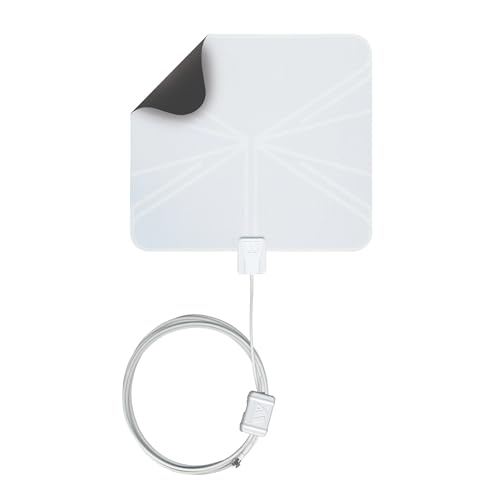 Winegard FlatWave Amped Indoor TV Antenna, FL5500A
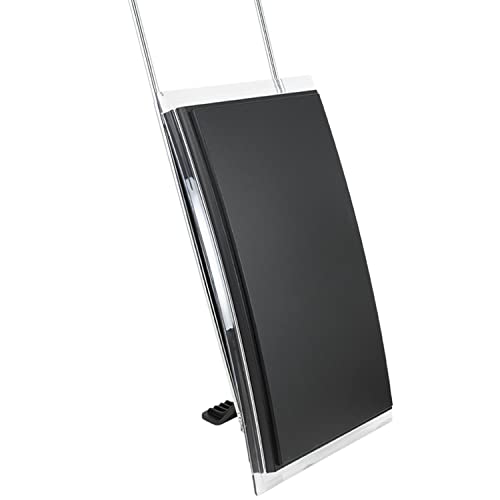 GE Amplified Indoor HD Digital TV Antenna, 34134









