
Our Short List of 3

- Model: ODX-AGM31, formerly the 31-PC2150S
- Group: 31, threaded stud terminals
- Rating highlights from the manufacturer: 1,150 CCA, 103 amp-hours at the twenty-hour rate, 220 minutes reserve capacity

- Model: 31-AGM7
- Group: 31T, threaded stud terminals
- Rating highlights from the manufacturer: 925 CCA, 100 amp-hours, 200 minutes reserve capacity
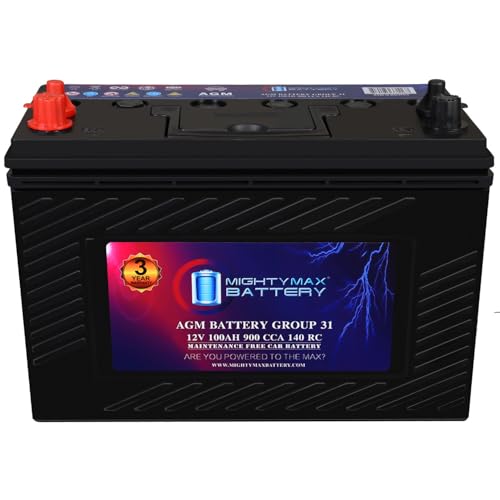
- Model: MM-G31
- Group: 31
- Rating highlights from the listing: 900 CCA, 100 amp-hours, 140 minutes reserve capacity
All 3 Picks at a Glance
| Product | Specs | Action |
|---|---|---|
| 1. Odyssey ODX-AGM31 Extreme Series — the maximum cranking pick |
| Check price on Amazon |
| 2. Interstate 31-AGM7 — the commercial cycling specialist |
| Check price on Amazon |
| 3. Mighty Max MM-G31 — the value bank replacement |
| Check price on Amazon |
Key takeaways
- The best tractor trailer battery is a Group 31 commercial battery with the CCA, reserve capacity and stud terminals your semi needs. Compare three verified-format AGM picks and learn how to spec a replacement.
As an Amazon Associate we earn from qualifying purchases.
Affiliate Disclosure: This article contains affiliate links. If you buy through a link on this page, we may earn a commission at no extra cost to you. Product names, specifications and availability are taken from the manufacturer’s and retailer’s product pages at the time of writing, and we have not personally tested the products listed here.
What a tractor trailer actually asks of its batteries
A semi tractor does not use a car battery, and it does not use just one battery either. Most Class 8 tractors carry a bank of three or four batteries wired in parallel, and that bank has two jobs that pull in opposite directions. The first job is starting a large diesel engine, often in cold weather, often after the truck has sat overnight with hotel loads drawing power. The second job is acting as the truck’s overnight power supply: bunk heater or air conditioning support, interior lights, a refrigerator, device charging, and the electronics that never fully sleep on a modern tractor.
That double duty is why the standard fitment for a tractor trailer is the BCI Group 31 commercial battery. A Group 31 case measures roughly thirteen inches long, about six and thirteen-sixteenths inches wide and around nine and a half inches tall, and it is built with thicker plates, stronger internal connections and, on most over-the-road fitments, threaded stud terminals instead of the tapered posts found on car batteries. When you shop for a replacement, Group 31 is the starting point, but it is only the starting point. Two Group 31 batteries can differ enormously in cold cranking amps, reserve capacity and cycling ability, and those differences decide whether a truck starts on a January morning in Minnesota or needs a jump box and a service call.
This guide explains the specifications that matter, then presents three Group 31 batteries that fit the tractor trailer brief in different ways: a maximum-cranking pure lead AGM, a commercial cycling AGM built for trucks with heavy auxiliary loads, and a value AGM for fleets and owner-operators replacing a full bank at once. All three are twelve-volt commercial batteries of the correct type. None of them is a car battery, a marine battery dressed up as a truck battery, or a lithium conversion, and the reasons for those exclusions are covered below.
The specifications that matter, in the order they matter
Cold cranking amps
Cold cranking amps, or CCA, is the current a battery can deliver for thirty seconds at zero degrees Fahrenheit while holding its voltage above the stated threshold. Diesel engines are hard to crank: high compression, thick cold oil and glow plug or intake heater loads all stack up at the worst moment. For a single Group 31 in a multi-battery bank, ratings in the nine hundred to one thousand one hundred fifty CCA range cover most over-the-road tractors. If your truck lives in genuinely cold regions, or the engine maker specifies a minimum cranking performance, treat the higher end of that range as your target and remember that the bank is only as strong as its weakest battery, which is why banks are replaced as matched sets.
Reserve capacity and amp-hour capacity
Reserve capacity is the number of minutes a fully charged battery can carry a twenty-five amp load before its voltage falls to the cutoff point. It is the specification that predicts overnight behaviour. A tractor parked for a ten-hour rest break with a bunk heater, fridge and electronics running is drawing a steady load for hours, and reserve capacity, together with the amp-hour rating, tells you how deep that overnight draw will cut into the bank. Higher reserve capacity also means each overnight cycle is shallower, and shallower cycles are the single biggest lever on service life for a dual-purpose truck battery.
Cycling ability
A starting battery in a car might discharge a few percent of its capacity on each start. A tractor trailer battery bank can be cycled deeply every single night, then asked to crank a diesel in the morning. That is deep-cycle work, and ordinary flooded starting batteries tolerate it poorly. This is why absorbed glass-mat construction, and especially thin plate pure lead AGM designs, dominate serious tractor trailer recommendations: they accept charge faster, resist vibration better and survive far more deep cycles than a conventional flooded commercial battery. Interstate, for example, rates its 31-AGM7 commercial AGM at four hundred extreme deep cycles, and describes conventional alloy AGM products as delivering around one hundred. Treat manufacturer cycle claims as comparative rather than absolute, but the ordering between designs is real.
Terminal type and group sub-type
Group 31 comes in stud and post variants, often marked 31T for threaded stud and 31A or 31P for automotive post. Most over-the-road tractors use stud terminals, which clamp the cable lug with a nut and resist loosening under vibration. Order the wrong variant and the cables will not attach properly, full stop. Check the batteries currently in the box before ordering, photograph the terminals if you are unsure, and match the replacement exactly, including which side the positive terminal sits on.
Vibration resistance and construction
A battery box on a frame rail lives a violent life. AGM construction, where the electrolyte is held in glass fibre separators and the plates are compressed in the case, is inherently more vibration tolerant than a flooded battery with free liquid. Pure lead plate designs add faster recharge acceptance, which matters when the alternator has limited driving hours to refill a bank drained overnight. None of this is visible from the outside, so buy on the manufacturer’s stated construction and commercial rating rather than on case styling.
The three picks
1. Odyssey ODX-AGM31 Extreme Series — the maximum cranking pick
- Model: ODX-AGM31, formerly the 31-PC2150S
- Group: 31, threaded stud terminals
- Rating highlights from the manufacturer: 1,150 CCA, 103 amp-hours at the twenty-hour rate, 220 minutes reserve capacity
The Odyssey Extreme Series battery is the benchmark Group 31 for hard starting. EnerSys builds it with thin plate pure lead AGM construction, and the manufacturer’s data sheet for the ODX-AGM31 lists a pulse cranking figure of 2,150 amps, cold cranking amps of 1,150, a twenty-hour capacity of 103 amp-hours and a reserve capacity of 220 minutes, in a case thirteen inches long and weighing just under seventy-eight pounds. Those are the strongest headline cranking numbers in this guide, and they come with the deep-cycle tolerance that overnight hotel loads demand, because the same pure lead plate design that cranks hard also cycles well and recharges quickly from the alternator.
Choose the Odyssey when cold starts are your pain point, when the truck runs a big inverter or an electric auxiliary system, or when downtime costs more than batteries do. Two honest cautions. First, the stud terminal layout must match your truck; this listing is the stud version. Second, pure lead AGM batteries ask for correct charging voltage, so confirm your alternator and any auxiliary charging system fall within the maker’s stated range before fitting a full bank.
2. Interstate 31-AGM7 — the commercial cycling specialist
- Model: 31-AGM7
- Group: 31T, threaded stud terminals
- Rating highlights from the manufacturer: 925 CCA, 100 amp-hours, 200 minutes reserve capacity
Interstate built the 31-AGM7 specifically for commercial trucking duty, and its own trucking battery pages list it among the heavy truck cycling batteries rather than the marine range. The specification reflects that brief: 925 cold cranking amps, 1,155 cranking amps, a one hundred amp-hour capacity and two hundred minutes of reserve capacity, in a Group 31T case weighing about sixty-nine and a half pounds. Interstate’s Pure Matrix Power description centres on cycling: the company rates this battery at four hundred extreme deep cycles and positions it for trucks with extra fuel tanks requiring batteries in the cab, refrigeration support, auxiliary power units and other high-demand applications.
That makes the 31-AGM7 the natural pick for sleeper tractors whose banks work hard every night, where cycle life across a full bank matters more than the last increment of cranking power. Interstate also publishes a thirty-six month free replacement period for this commercial model in its warranty materials, which is worth confirming against the terms attached to the specific listing before purchase, since commercial battery warranty handling differs from car battery handling. As with the Odyssey, match the stud terminal format to the truck in front of you.
3. Mighty Max MM-G31 — the value bank replacement
- Model: MM-G31
- Group: 31
- Rating highlights from the listing: 900 CCA, 100 amp-hours, 140 minutes reserve capacity
Replacing a tractor battery bank means buying three or four batteries at once, and at that multiplier the premium models become a serious line item. The Mighty Max MM-G31 is the budget-conscious route that stays inside the correct specification: a sealed AGM Group 31 battery rated at twelve volts, one hundred amp-hours, nine hundred cold cranking amps and one hundred forty minutes of reserve capacity, weighing about fifty-seven and a half pounds, noticeably lighter than the pure lead designs above. The listing describes a sealed, spill-proof, rechargeable AGM battery built to resist shock and vibration.
Be clear-eyed about the trade. Its reserve capacity is well below the two premium picks, so overnight loads will cycle it more deeply, and its long-term cycle endurance should be expected to trail theirs as well. For a day cab, a regional tractor that returns to base nightly, or a fleet standardising on scheduled bank replacement, that trade can be entirely rational. For a long-haul sleeper parked in cold country, the first two picks earn their keep. Check the terminal format on this listing against your truck before ordering a set, as value Group 31 listings are sold in more than one terminal configuration.
Side by side
| Specification | Odyssey ODX-AGM31 | Interstate 31-AGM7 | Mighty Max MM-G31 |
|---|---|---|---|
| Group size | 31, stud | 31T, stud | 31 |
| Cold cranking amps | 1,150 | 925 | 900 |
| Capacity | 103 Ah at the 20-hour rate | 100 Ah | 100 Ah |
| Reserve capacity | 220 minutes | 200 minutes | 140 minutes |
| Construction | Thin plate pure lead AGM | Pure lead commercial AGM | Sealed AGM |
| Best fit | Cold starts, heavy hotel loads | Sleeper cycling duty | Day cabs, value bank replacement |
Why this guide contains no flooded batteries and no lithium conversions
A conventional flooded Group 31 is not a mistake in every truck. In a mild climate, on a day cab with light electrical loads and a disciplined maintenance routine that keeps electrolyte levels checked and terminals clean, a flooded commercial battery can give acceptable service. But as a general recommendation for tractor trailers, flooded batteries lose on the points that matter most: deep overnight cycling shortens their life, they need watering that sealed batteries do not, and they are less tolerant of frame-rail vibration. Every pick above is AGM for those reasons.
Lithium iron phosphate Group 31 batteries are sold for trucks, and the weight saving is real, but a lithium bank is a system conversion, not a battery swap. Charging profiles, cold-weather charge acceptance, alternator loading and battery management all change, and a diesel tractor that cannot accept a charge on a freezing morning has a problem no weight saving compensates for. Fleets making that move should do it as an engineered project with the truck or system maker involved. It does not belong in a like-for-like replacement list, so it is not in this one.
You will also notice that no marine Group 31 batteries appear above, although they share the case size. Marine variants use different terminal arrangements and are tuned for boat duty cycles. A battery marketed for boats and recreational vehicles is not the best tractor trailer battery just because it physically fits in the box.
Fitting and maintenance notes that protect your money
Replace the bank as a set. Mixing one new battery with three aged ones forces the new battery to work against the weakest members of the bank and shortens its life; the old batteries also drag down cranking performance to roughly their own level. Clean and inspect every cable end and the battery box itself at replacement time, because corroded lugs and damaged cables imitate battery failure convincingly. Torque stud nuts to the battery maker’s specification rather than by feel: under-torqued connections overheat, and over-torqued studs can damage the terminal.
After fitting, verify charging voltage at the batteries with the engine running and loads on. A bank that never receives full charge will sulphate or, in AGM terms, dry out and lose capacity early, and the failure will be blamed on the batteries when the alternator or a voltage drop in the cables caused it. If the truck has a battery disconnect switch, use it during long parking periods, and if it sits for weeks, a maintainer charge is cheap insurance. Finally, keep the paperwork for each battery in the bank together. Commercial warranty claims go more smoothly when purchase records and model details are in one place.
Frequently asked questions
How many batteries does a tractor trailer use?
Most Class 8 tractors carry three or four Group 31 batteries wired in parallel to make a twelve-volt bank, though some configurations and auxiliary systems differ. Count the batteries in your own truck’s box before ordering, and replace the full set together.
Can I use a regular car battery in a semi truck in an emergency?
A car battery is the wrong group size, the wrong terminal format in most cases and far below the required cranking and reserve ratings. It is not a workable substitute for a Group 31 commercial battery, even briefly, and attempting to adapt cables to fit creates its own hazards. The correct emergency answer is a jump from another commercial vehicle or a heavy-duty jump pack rated for diesel starting.
How long should a tractor trailer battery bank last?
Service life depends on cycling depth, temperature, charging health and vibration. A quality AGM bank in sleeper service that is recharged fully each driving day should be planned around a multi-year service interval, with testing at each preventive maintenance visit so a weakening bank is replaced on your schedule rather than at a roadside stop. Deep nightly discharge, chronic undercharging and extreme heat all shorten that interval substantially.
What is the difference between Group 31T and Group 31A?
The letter marks the terminal style. The T variant uses threaded stud terminals, the common over-the-road truck fitment, while the A variant uses tapered automotive posts. The case size is essentially the same, but the cables are made for one or the other. Match the letter to the batteries your truck already carries.
Bottom line
The best tractor trailer battery is a Group 31 commercial battery whose cranking amps, reserve capacity and terminal format match your truck, bought as a matched bank and supported by a healthy charging system. Pick the Odyssey ODX-AGM31 when maximum cranking power and reserve are the priority, the Interstate 31-AGM7 when nightly sleeper cycling defines the job, and the Mighty Max MM-G31 when a correct-specification AGM bank at a value position is the sensible fleet decision. Whichever you choose, verify the terminal type against the truck in front of you before the set ships, because that single detail is the most common and most avoidable ordering mistake in this category.









