Our Short List of 3
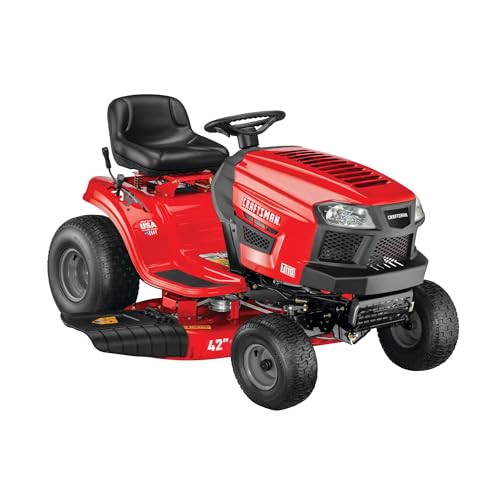
- Best for: Flat suburban lawns up to 2 acres where a compact tractor with simple gears is enough.
- Engine: 17.5 HP Briggs and Stratton single-cylinder engine
- Power source: Gas powered
- Cutting width: 42 inches
- Deck: 42-inch stamped steel deck
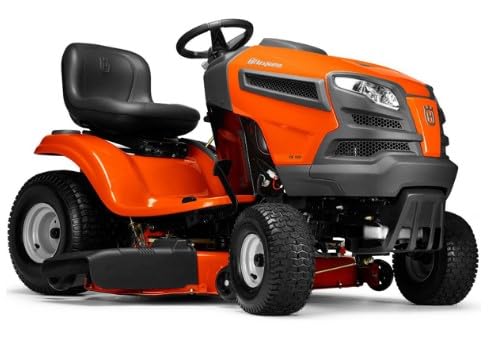
- Best for: Homeowners who want a simple steering-wheel tractor with a bit more engine power for thick seasonal growth.
- Engine: 19 HP Briggs engine
- Power source: Gas powered
- Cutting width: 42 inches
- Model number: 970846301
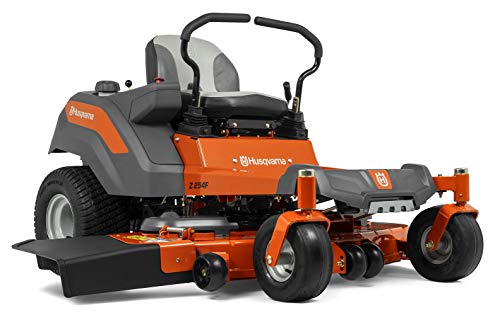
- Best for: Large flat lawns with many obstacles, where turning in place saves time on every pass.
- Engine: 23 HP Kawasaki engine
- Power source: Gas powered
- Cutting width: 54 inches
- Steering: Zero turn with hydrostatic transmission
All 4 Picks at a Glance
| Product | Specs | Action |
|---|---|---|
| CRAFTSMAN 42-Inch Gas Riding Lawn Mower |
| Check price on Amazon |
| Husqvarna TS 120 Riding Lawn Mower |
| Check price on Amazon |
| Husqvarna Z254F Zero Turn Riding Mower |
| Check price on Amazon |
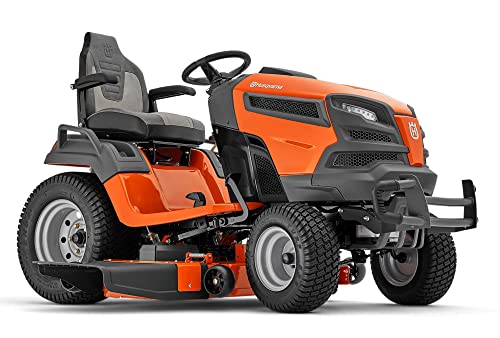 Husqvarna TS 354XD Riding Lawn Mower |
| Check price on Amazon |
Key takeaways
- Compare four gas riding mowers for suburban lawns, from a compact 42-inch Craftsman tractor to 54-inch Husqvarna zero-turn and garden tractor models.
The real decision behind a gas riding mower is not the brand on the hood. It is matching the deck, the engine, and the steering to the lawn you actually mow every week. A 42-inch deck that turns tightly around flower beds can be the right tool for a half-acre lot with trees, while the same machine would take far too long on a wide-open two-acre property. Engine power matters too, because thick spring growth and gentle slopes ask more from a mower than flat, thin summer grass ever will.
This guide is for suburban homeowners with lawns too large to walk behind a push mower, owners of corner lots with trees and garden beds to steer around, and anyone moving from a small yard to a property where mowing takes real time. The picks below come from the names and specifications listed on each Amazon product page, including engine size, deck width, transmission type, and cutting height, so you can compare them on facts rather than promises.
Quick Picks
As an Amazon Associate we earn from qualifying purchases.
| Product | Best for | Key spec from title |
|---|---|---|
| CRAFTSMAN 42-Inch Gas Riding Lawn Mower | Flat suburban lawns up to 2 acres with beds to steer around | 17.5 HP Briggs and Stratton engine with 42-inch deck |
| Husqvarna TS 120 Riding Lawn Mower | Straightforward tractor mowing on a medium suburban lot | 19 HP Briggs engine with 42-inch deck |
| Husqvarna Z254F Zero Turn Riding Mower | Large lawns where mowing time matters most | 23 HP Kawasaki engine with 54-inch deck |
| Husqvarna TS 354XD Riding Lawn Mower | Sloped or rough ground that needs grip and a heavy deck | 24 HP Kawasaki engine with 54-inch ClearCut deck |
How to Choose
Deck Width and Lawn Size
Deck width decides how many passes your lawn takes, and the right width depends on the size and shape of your property. A 42-inch deck suits lawns up to around 2 acres, especially where trees, beds, and fences force frequent turns, because a narrower deck threads through gaps a wide deck cannot enter. A 54-inch deck cuts a much wider path and finishes large open lawns faster, but it needs wide gates and open turning room. Measure your narrowest gate and your tightest turn before choosing, since a deck that cannot reach part of your lawn is useless no matter how fast it cuts the rest.
Engine Power and Transmission
Engine power decides how the mower handles thick grass, damp growth, and slopes. A single-cylinder engine in the high teens of horsepower handles flat suburban lawns well, while a twin-cylinder engine in the low twenties keeps its speed better when the grass is tall or the ground rises. Transmission matters just as much: a manual gear transmission gives you set speeds to choose from, while a hydrostatic transmission lets you change speed smoothly with a pedal, which feels easier when you constantly speed up and slow down around obstacles. Match both to your terrain, not just to the size of your lawn.
Tractor Steering or Zero-Turn Steering
A lawn tractor steers with a wheel and behaves like a small vehicle, which feels familiar and stable, especially on slopes and uneven ground. A zero-turn mower steers with two levers and can spin in place, which cuts mowing time sharply on flat lawns with many obstacles, because you never need a wide turning circle at the end of each pass. The trade-off is that zero-turn mowers need practice to drive smoothly and can feel less planted on steep ground. If your lawn is mostly flat with beds and trees, zero-turn steering saves real time; if it slopes, a tractor is the safer starting point.
Storage, Fuel, and Upkeep
A riding mower is a large machine that needs a dry place to live and regular care through the season. Check the overall length and width against your garage or shed before ordering, and remember that a 54-inch deck needs more floor space than a 42-inch one. Gas mowers need fresh fuel, oil changes, blade sharpening, and a charged battery, so think about whether you will do that upkeep yourself or rely on a local shop. A mower that fits your storage and your willingness to maintain it will last far longer than one bought on engine size alone.
The 4 Best Options
CRAFTSMAN 42-Inch Gas Riding Lawn Mower
- Best for: Flat suburban lawns up to 2 acres where a compact tractor with simple gears is enough.
- Engine: 17.5 HP Briggs and Stratton single-cylinder engine
- Power source: Gas powered
- Cutting width: 42 inches
- Deck: 42-inch stamped steel deck
Flat suburban lawns up to 2 acres where a compact tractor with simple gears is enough.
Check your gate width and shed space before ordering, since even a 42-inch deck needs clear access to the lawn and a dry place to park.
The Craftsman 42-inch tractor is the straightforward pick for a typical suburban lawn. Its 17.5-horsepower Briggs and Stratton single-cylinder engine starts easily and handles regular weekly mowing, while the 42-inch stamped steel deck cuts up to 2 acres without demanding a wide gate or a large shed. The seven-speed manual transmission lets you pick a speed for open stretches and a slower one near beds and fences, and the contoured low-back seat keeps the ride comfortable across a full mowing session. Heavy-duty wheels help it roll over uneven ground and around obstacles without fuss.
Watch out for: Check your gate width and shed space before ordering, since even a 42-inch deck needs clear access to the lawn and a dry place to park.
Husqvarna TS 120 Riding Lawn Mower
- Best for: Homeowners who want a simple steering-wheel tractor with a bit more engine power for thick seasonal growth.
- Engine: 19 HP Briggs engine
- Power source: Gas powered
- Cutting width: 42 inches
- Model number: 970846301
Homeowners who want a simple steering-wheel tractor with a bit more engine power for thick seasonal growth.
Confirm the deck and engine details against the listing for your exact model number, since Husqvarna sells several similar 42-inch tractors with different engines.
The Husqvarna TS 120 is a no-nonsense lawn tractor for a medium suburban lot. Its 19-horsepower Briggs engine gives it a little more muscle than the smallest tractors in this guide, which helps when spring growth comes in thick or the lawn has a gentle rise. The 42-inch deck keeps it nimble around trees and beds, and the familiar steering-wheel layout makes it easy to hand over to another family member without a driving lesson. Manual operation keeps the controls simple: throttle, gears, and blade engagement, with nothing extra to learn before the first mow.
Watch out for: Confirm the deck and engine details against the listing for your exact model number, since Husqvarna sells several similar 42-inch tractors with different engines.
Husqvarna Z254F Zero Turn Riding Mower
- Best for: Large flat lawns with many obstacles, where turning in place saves time on every pass.
- Engine: 23 HP Kawasaki engine
- Power source: Gas powered
- Cutting width: 54 inches
- Steering: Zero turn with hydrostatic transmission
Large flat lawns with many obstacles, where turning in place saves time on every pass.
Practice on open ground first, since zero-turn levers feel very different from a steering wheel, and the mower needs flat or gently sloped ground to feel stable.
The Husqvarna Z254F is the pick when mowing time is the problem you are trying to solve. Its 23-horsepower Kawasaki engine and 54-inch deck cover wide open ground quickly, and the hydrostatic zero-turn steering lets you turn in place at the end of each pass instead of swinging a wide arc. That combination matters most on large flat lawns with trees and beds, where a tractor spends much of its time turning around. The zero-turn layout takes a short learning period, but once the levers feel natural, weekly mowing takes noticeably less of your Saturday.
Watch out for: Practice on open ground first, since zero-turn levers feel very different from a steering wheel, and the mower needs flat or gently sloped ground to feel stable.
Husqvarna TS 354XD Riding Lawn Mower
- Best for: Larger properties with slopes, rough ground, or thick growth where grip and a fabricated deck matter.
- Engine: 24 HP Kawasaki V-twin engine, 726 cc
- Power source: Gas powered
- Cutting width: 54 inches
- Deck: 54-inch ClearCut fabricated deck
Larger properties with slopes, rough ground, or thick growth where grip and a fabricated deck matter.
Measure your storage space and gate width carefully, since this is a large garden tractor with a 54-inch deck and a long frame.
The Husqvarna TS 354XD is the heavy-duty garden tractor in this guide, built for ground that asks more from a mower than flat suburban turf. Its 24-horsepower Kawasaki V-twin engine and 54-inch ClearCut fabricated deck handle thick grass and rough patches, while the differential lock gives the rear wheels extra grip when one side loses traction on a slope or damp ground. The hydrostatic transmission changes speed smoothly with a pedal, so you can slow down for rough sections without shifting gears. A high-back seat and a sturdy frame round out a machine meant for larger, tougher properties.
Watch out for: Measure your storage space and gate width carefully, since this is a large garden tractor with a 54-inch deck and a long frame.
Which One Fits Your Situation
A Flat Half-Acre to One-Acre Lawn
Choose the CRAFTSMAN 42-inch riding mower when your lawn is flat, fenced, and full of beds to steer around. The 42-inch deck fits through standard gates, the seven-speed transmission gives you control near obstacles, and the engine has enough power for regular weekly mowing. It is the simplest machine here, and for a flat suburban lot, simple is exactly right.
A Larger Lawn With Trees and Beds
Choose the Husqvarna Z254F when your lawn is big and broken up by trees, beds, and paths. The zero-turn steering lets you pivot around each obstacle instead of making wide turns, and the 54-inch deck clears open stretches quickly between them. Give yourself one practice session on open grass first, and the levers will feel natural by the second mow.
Slopes and Rough Ground
Choose the Husqvarna TS 354XD when your property rises, dips, or turns rough under the wheels. The differential lock keeps traction when one rear wheel slips, the fabricated deck stands up to uneven ground, and the twin-cylinder Kawasaki engine holds its speed on climbs. The steering-wheel layout also feels more planted on a slope than zero-turn levers do.
A Big Open Lawn You Want to Finish Fast
Choose the Husqvarna Z254F when your lawn is mostly open and your goal is the shortest mowing time. The 54-inch deck and zero-turn steering combine to cut the number of passes and remove turning time at the end of each row. If your ground is flat and your gates are wide enough, no tractor in this guide finishes an open lawn faster.
Common Mistakes
- Buying a 54-inch deck before measuring the narrowest gate, then finding the mower cannot reach the back lawn at all.
- Choosing a zero-turn mower for a steeply sloped property, where a steering-wheel tractor would feel more stable.
- Picking the smallest engine for a lawn with thick spring growth, then watching the mower bog down every April.
- Forgetting storage space and leaving a large mower outside through rain and winter.
- Skipping basic upkeep such as oil changes, blade sharpening, and fresh fuel, then blaming the mower when cutting quality drops.
Frequently Asked Questions
What size riding mower do I need for a half-acre lawn?
A 42-inch deck suits a half-acre lawn well, especially when trees, beds, and fences break up the ground. It turns tightly, fits through standard gates, and finishes the job without demanding a large shed. A 54-inch deck only makes sense at this size when the lawn is wide open and your gates are broad enough to admit it.
Is a zero-turn mower better than a lawn tractor?
A zero-turn mower is better on flat lawns with many obstacles, because it turns in place and cuts mowing time. A lawn tractor is better on slopes and uneven ground, because steering-wheel control feels more stable and the weight sits differently. Choose based on your terrain rather than on speed alone, since the wrong steering type on the wrong ground is a poor trade.
How much engine power does a suburban lawn need?
A single-cylinder engine in the high teens of horsepower handles flat suburban lawns with regular weekly mowing. Move to a twin-cylinder engine in the low twenties when the lawn is large, the grass grows thick in spring, or the ground slopes. More power mainly shows up as steady blade speed in heavy grass, not as a faster top speed across the lawn.
Can a gas riding mower handle wet grass?
A gas riding mower can cut damp grass, but wet clippings clump under the deck and leave an uneven finish. Wait for the grass to dry when you can, and mow more often during wet spells so each pass removes less growth. If you must mow damp grass, slow down and clear clippings from under the deck afterward so they do not harden into place.