
Key takeaways
- Find the best calorie counter smartwatches for workouts, daily activity and weight goals, with accurate tracking, battery life and iPhone and Android picks.
The best calorie counter smartwatches do more than show a single number at the end of the day. They combine heart rate sensing, motion tracking, GPS and sleep data to estimate how many calories you burn during workouts, at work, while walking and while you sleep. That fuller picture matters, because most of your daily burn comes from ordinary movement, not just from a gym session. A good calorie counter smartwatch should track active and resting calories separately, let you set a daily target, and stay accurate when you switch from running to strength training, cycling, swimming or a long walk.
Accuracy depends on the sensors, on how well the watch fits, on whether you enter your age, height, weight and activity level correctly, and on whether the companion app helps you understand the data. Battery life matters too, because a watch that needs charging every night cannot track your sleep, and sleep affects recovery, hunger and the next day’s energy use. This guide covers five smartwatches that count calories as a core feature, with heart rate monitoring, workout tracking and a companion app for reviewing calorie burn over days, weeks and months.
As an Amazon Associate, we earn from qualifying purchases.
Quick Picks
Our Short List of 3

- Best for: Android users who want the most complete daily calorie, sleep and readiness picture in one watch.
- Best for: iPhone users who want straightforward, dependable calorie counting and the best Apple Health integration.

- Best for: Runners and endurance athletes who want accurate workout calorie totals, long battery life and recovery guidance.
All 4 Picks at a Glance
| Product | Specs | Action |
|---|---|---|
| 1. Samsung Galaxy Watch 7 40mm |
| Check price on Amazon |
| 2. Apple Watch SE (2nd Gen) GPS 40mm |
| Check price on Amazon |
| 3. Garmin Forerunner 265 |
| Check price on Amazon |
 4. Fitbit Versa 4 |
| Check price on Amazon |
1. Samsung Galaxy Watch 7 40mm
- Best for: Android users who want the most complete daily calorie, sleep and readiness picture in one watch.
Android users who want the most complete daily calorie, sleep and readiness picture in one watch.
The Samsung Galaxy Watch 7 is our top pick because it pairs strong calorie tracking with a useful daily readiness picture. Samsung Health records calories burned during workouts and across the day, and the watch adds an Energy Score based on sleep, activity and heart rate, so you can interpret a high or low calorie day in context. It also supports body composition measurement, an estimate of muscle and body fat that can sit alongside weight, although it is not a medical measurement.
The 40mm model has a bright Super AMOLED display, dual-frequency GPS for accurate distance and pace, and the BioActive Sensor for heart rate, blood oxygen and stress. It supports more than 90 workout modes, with automatic detection for walking, running and cycling. In Samsung Health you can review total, active and workout calories, set goals, see trends and log food to compare intake with burn. The watch works best with a Samsung Galaxy phone, also works with other Android phones, and is not compatible with iPhone.
Key specs: 1.3-inch Super AMOLED display; BioActive Sensor; dual-frequency GPS; more than 90 workout modes; up to around 40 hours of battery life; 5 ATM plus IP68 water resistance; Android only.
Pros:
– Clear daily and workout calorie totals, with Energy Score context
– Accurate dual-frequency GPS and a strong heart rate sensor
– Bright, readable display and a fast Wear OS experience
Cons:
– Battery life is shorter than dedicated fitness watches
– Not compatible with iPhone, and some Galaxy AI features need a Samsung phone
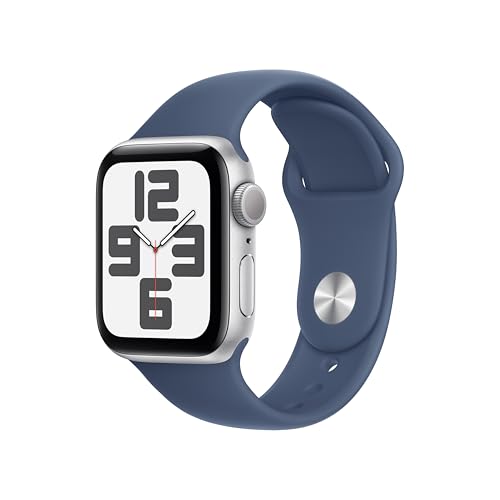
2. Apple Watch SE (2nd Gen) GPS 40mm
- Best for: iPhone users who want straightforward, dependable calorie counting and the best Apple Health integration.
iPhone users who want straightforward, dependable calorie counting and the best Apple Health integration.
The Apple Watch SE (2nd Gen) is the best calorie counter smartwatch for iPhone users who want simple, reliable tracking. Its calorie counting is built around the Activity rings: Move, Exercise and Stand. The Move ring shows active calories, while Apple Health also records resting energy, total energy and workout energy separately, so you can see how much of your daily burn came from exercise and how much came from ordinary activity.
The watch tracks heart rate all day and during workouts, uses built-in GPS for outdoor runs, walks and rides, and supports many workout types, from interval training and strength work to swimming, yoga and dance. Sleep tracking, fall detection and crash detection add everyday value. The light 40mm case is comfortable for all-day wear and sleeping. The trade-off is battery life, rated at up to 18 hours, so most people charge daily, and the SE lacks the blood oxygen sensor and ECG app of higher-end Apple Watches.
Key specs: Retina LTPO OLED display, 40mm case; optical heart rate sensor; built-in GPS; running, cycling, swimming, strength, yoga and HIIT modes; up to 18 hours of battery life; 50 metres water resistance; iPhone only.
Pros:
– Simple, motivating calorie tracking through Activity rings and Apple Health
– Comfortable, lightweight design for all-day and overnight wear
– Strong app support, including food logging apps that sync calorie data
Cons:
– Battery life is the shortest in this guide, so daily charging is needed
– Lacks blood oxygen and ECG sensors found on higher-end Apple Watch models
3. Garmin Forerunner 265
- Best for: Runners and endurance athletes who want accurate workout calorie totals, long battery life and recovery guidance.
Runners and endurance athletes who want accurate workout calorie totals, long battery life and recovery guidance.
The Garmin Forerunner 265 is the best calorie counter smartwatch for runners and endurance athletes. Every run, ride or swim gets a detailed calorie total based on heart rate, pace, distance, elevation and your personal profile, and Garmin Connect adds daily totals, resting calories and intensity minutes. The watch also tracks training load, recovery time, sleep, stress and heart rate variability, so you can see whether a high-calorie training day left you recovered or in need of an easier day.
The bright 1.3-inch AMOLED touchscreen is easy to read in sunlight, the watch is light at 47 grams, and multi-band GPS gives accurate distance and pace even in built-up areas. It supports daily suggested workouts, Garmin Coach plans and music storage for phone-free runs. Battery life is a major strength: up to 13 days in smartwatch mode and up to 20 hours in GPS mode. The trade-off is that it is less of a general smartwatch than Samsung or Apple, with fewer third-party apps and a training-focused interface that casual users may find busy.
Key specs: 1.3-inch AMOLED touchscreen, 46mm case; heart rate and pulse oximetry sensors; multi-band GPS; running, cycling, swimming, strength and HIIT modes; up to 13 days of battery life in smartwatch mode; 5 ATM water resistance; Android and iPhone.
Pros:
– Detailed per-workout and daily calorie totals tied to training load and recovery
– Excellent battery life, so sleep and daily calorie tracking are rarely interrupted
– Accurate multi-band GPS and a bright AMOLED display
Cons:
– Less of an everyday smartwatch, with fewer third-party apps
– Training-focused interface can feel complex for simple step and calorie counting
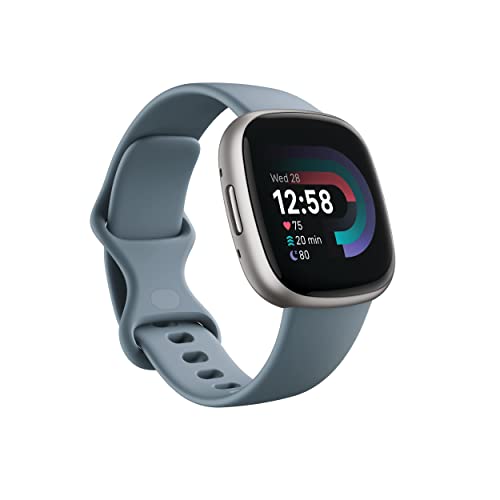
4. Fitbit Versa 4
- Best for: Everyday fitness, walking and weight management, especially for people who want long battery life and a simple app.
Everyday fitness, walking and weight management, especially for people who want long battery life and a simple app.
The Fitbit Versa 4 is the best calorie counter smartwatch for everyday fitness and weight goals. The watch tracks calories burned all day, breaks them into active and resting calories in the Fitbit app, and combines that with steps, distance, Active Zone Minutes, heart rate and sleep data. Daily Readiness gives a simple morning score, based on sleep, heart rate variability and recent activity, to suggest whether to push hard or take it easier.
The Versa 4 has a 1.58-inch display, built-in GPS, more than 40 exercise modes and 24/7 heart rate tracking, and it is water resistant to 50 metres, so it can track swimming as well as running, cycling and strength sessions. Battery life of more than 6 days is a real advantage: you can wear the watch overnight, charge it briefly while getting ready, and keep a continuous record. The Fitbit app also makes food logging straightforward, so you can compare calories in with calories out in one place. The Versa 4 has fewer third-party apps than Wear OS or watchOS, and some deeper insights sit behind a Fitbit Premium subscription.
Key specs: 1.58-inch display; heart rate, blood oxygen and altimeter sensors; built-in GPS; more than 40 exercise modes; more than 6 days of battery life; 50 metres water resistance; Android and iPhone.
Pros:
– Clear daily calorie burn, Active Zone Minutes and food logging in one app
– Long battery life supports continuous sleep and calorie tracking
– Comfortable, approachable design for all-day wear and weight management
Cons:
– Some deeper insights require a Fitbit Premium subscription
– Fewer third-party apps than Samsung Galaxy Watch or Apple Watch
5. Amazfit GTS 4
The Amazfit GTS 4 is the best calorie counter smartwatch for buyers who want long battery life and broad workout tracking without a premium smartwatch. The Zepp app records calories burned across more than 150 sport modes, from running, cycling and swimming to strength training, yoga, hiking and rowing, and shows daily totals alongside steps, heart rate, sleep and stress. Dual-band GPS helps keep distance and pace accurate outdoors, which supports more reliable workout calorie estimates. The watch also has Alexa built in, Bluetooth calls, and a one-tap measurement for heart rate, blood oxygen and stress.
The 1.75-inch AMOLED display is large, bright and easy to read, and the watch is very light at 27 grams without the strap, so it is comfortable for long runs and sleeping. Battery life of up to 8 days in typical use means the watch can stay on your wrist for sleep and recovery data without frequent charging. The BioTracker 4.0 sensor provides 24-hour heart rate, blood oxygen and stress monitoring, and the watch is water resistant to 5 ATM. Zepp OS is fast and simple, but it offers fewer third-party apps than Wear OS or watchOS, and food logging is less deep than Fitbit or Apple Health.
Key specs: 1.75-inch AMOLED display, 390 by 450 pixels; BioTracker 4.0 PPG sensor; dual-band GPS; more than 150 sport modes; up to 8 days of battery life in typical use; 5 ATM water resistance; Android and iPhone.
Pros:
– Calorie tracking across more than 150 sport modes, with a large, bright AMOLED display
– Long battery life of up to 8 days in typical use
– Light, comfortable design with dual-band GPS and Alexa built in
Cons:
– Zepp OS has fewer third-party apps than Wear OS or watchOS
– Food logging and health app integration are less deep than Fitbit or Apple Health
Best for: Buyers who want long battery life, many workout modes and a large display for calorie tracking on a sensible budget.
Buying Guide: How to Choose a Calorie Counter Smartwatch
Calorie counting on a smartwatch is an estimate, not a laboratory measurement. Most watches combine your age, height, weight and sex with heart rate, movement and GPS data to estimate energy use. A higher, sustained heart rate usually means a higher calorie burn, while GPS can use speed, distance and elevation to refine the figure. That is why a good heart rate sensor and a snug fit matter more than a brand name: wear the watch just above the wrist bone, tight enough that it does not slide during exercise, but not so tight that it is uncomfortable.
First, match the watch to your phone. Apple Watch works only with iPhone. Samsung Galaxy Watch 7 works best with Samsung Galaxy phones and other Android phones, and does not work with iPhone. Garmin, Fitbit and Amazfit work with both Android and iPhone, which makes them safer choices if you switch phones. Check the companion app before you buy, because that is where calorie trends, goals and food logging live.
Second, think about how you exercise. Runners and cyclists benefit most from accurate GPS and heart rate tracking, where the Garmin Forerunner 265 stands out. Swimmers need water resistance to at least 50 metres or 5 ATM and a dedicated swim mode. Walkers and everyday users may care more about step counting, all-day calorie totals and sleep tracking than about advanced running metrics. Choose the watch whose workout list matches what you actually do.
Third, consider battery life. A watch rated for 18 hours needs daily charging, and you will need a routine that does not lose sleep data. A watch rated for 6 to 13 days can track sleep, recovery and daily calories continuously, with only a short weekly charge. If you dislike charging gadgets, longer battery life is worth prioritising.
Fourth, decide how you want to use calorie data. If your goal is weight loss, look for a watch and app that let you log food, set a daily calorie target, and compare intake with burn in one place; Fitbit and Samsung Health both support that well. If your goal is performance, look for training load, recovery and readiness scores, which Garmin and Samsung provide. Finally, set the watch up correctly: enter correct age, height, weight and activity level, and wear the watch consistently. Look at weekly trends rather than a single day.
Frequently Asked Questions
Are calorie counter smartwatches accurate?
They provide a useful estimate, not an exact measurement. Accuracy depends on the heart rate sensor, GPS, your profile data and how snugly the watch fits. Most good watches are consistent enough to show trends and compare similar workouts. Enter correct age, height and weight, wear the watch consistently, and focus on weekly trends rather than a single day.
Do smartwatches count calories burned at rest?
Yes. Most show total calories, which includes resting energy, and active calories, the extra burn from movement and workouts. Resting energy is estimated from your profile, while active calories are based on heart rate and movement. Checking both helps you see how much of your daily burn comes from exercise and how much comes from ordinary activity.
Which smartwatch is best for counting calories for weight loss?
The Fitbit Versa 4 is a strong choice, because it combines daily calorie burn with food logging, Active Zone Minutes and Daily Readiness in one app. The Samsung Galaxy Watch 7 is also excellent for Android users, and the Apple Watch SE is the best option for iPhone users. Whichever you choose, consistent wear and honest food logging matter more than the brand.
Do I need GPS for accurate calorie counting?
GPS helps for outdoor running, walking and cycling, because it improves distance, pace and elevation data. For indoor workouts and strength training, heart rate and movement matter more. If you train mostly outdoors, choose a watch with built-in GPS, preferably dual-frequency or multi-band. If you train mostly indoors, prioritise heart rate accuracy, comfort and battery life.
Can a calorie counter smartwatch track calories from food?
A smartwatch alone cannot measure calories in food. You need to log meals in the companion app or a linked food logging app, then compare intake with the calories burned shown by the watch. Samsung Health, Fitbit and Apple Health all support food logging directly or through linked apps.
Conclusion
The best calorie counter smartwatches turn a simple calorie number into useful daily guidance, and the right choice depends on your phone, your training and how you want to use the data. For most Android users, the Samsung Galaxy Watch 7 is our number one pick: it combines clear calorie totals, Energy Score readiness, body composition insights, accurate GPS and a bright display. iPhone users should choose the Apple Watch SE (2nd Gen) for its simple rings and Apple Health integration. Runners should choose the Garmin Forerunner 265 for its training data and outstanding battery life, while everyday fitness and weight management are best served by the Fitbit Versa 4. The Amazfit GTS 4 rounds out the list with long battery life, many sport modes and a large display.
Our number one pick is the Samsung Galaxy Watch 7 40mm. It gives the most complete calorie picture for Android users, with workout calories, daily totals, sleep and readiness in one place. Whichever watch you choose, wear it every day and use weekly trends to guide your training and eating.









