We independently review everything we recommend. When you buy through our links, we may earn a commission. As an Amazon Associate we earn from qualifying purchases.
Best Budget Anti-Fatigue Mats for Standing Desks 2026
Compare the best budget anti-fatigue mats for standing desks and home offices, with flat foam and contoured terrain picks sized for daily standing work.
Compare the best budget anti-fatigue mats for standing desks and home offices, with flat foam and contoured terrain picks sized for daily standing work.
⭐ Key Takeaways
Quick answer: Our top pick is Topo Comfort Mat by Ergodriven, with Amazon Basics Anti-Fatigue Standing Mat as a strong alternative.
A standing desk only delivers its benefits if you can actually stay standing, and the surface under your feet decides how long that lasts. Hard floors push pressure into heels, knees and lower backs, which is why most standing workers drift back to the chair by mid-afternoon. An anti-fatigue mat spreads that pressure with a layer of supportive foam, and budget models have improved to the point where the basic job is done well for modest money. The choice comes down to style: flat foam mats in different sizes and thicknesses, or a contoured terrain mat that encourages small movements through the day. The five picks below cover both approaches, with sizes noted so you can match the mat to your desk footprint.
As an Amazon Associate, we earn from qualifying purchases.
Quick answer
For most standing desk users, a thick flat mat like the ComfiLife or Kangaroo in the 20 by 32 inch size is the budget answer. Choose the Gorilla Grip 39 by 20 for a longer desk, the Amazon Basics mat for the simplest low-cost option, and the Topo by Ergodriven if you want contoured terrain that keeps your feet moving.
The Topo takes a different approach from every flat mat here. Instead of a plain rectangle of foam, its contoured surface has raised edges, a front rail and varied terrain designed to give your feet positions to explore, so you shift, stretch and change stance through the day rather than standing statue-still. The mat is made from a single piece of polyurethane, measures roughly 29 by 26 inches, and pairs naturally with a standing desk where you have room to move. Ergodriven positions it as the movement option for people who found flat mats only delayed the same aches. The trade-offs are price and footprint: it costs more than the flat mats in this guide, takes more floor space, and the bumps are not for everyone, particularly if you prefer to stand in socks on a completely even surface or share the desk with a rolling chair. For committed standing workers who fidget anyway, the Topo turns that restlessness into the point of the product.
The Amazon Basics mat is the no-frills entry point: a flat foam rectangle, listed at 36 by 20 inches with a cushioned thickness of just over half an inch, that takes the edge off hard floors at a desk, a workbench or a kitchen counter. The textured surface gives reasonable grip, the edges are finished to resist curling, and the foam has enough give to soften heel pressure without feeling like standing on a sponge. There are no terrain features, no massage bumps and no oversized options, and the thickness is modest next to the three-quarter-inch mats below, so heavier users or very long standing sessions may want the deeper foam of the ComfiLife or Kangaroo instead. What you get is the core benefit of the category in its simplest form, from a house brand that keeps the price at the floor of the market. For a first standing mat, a second mat for the kitchen, or a spare for a home workshop, it covers the basics honestly.
The ComfiLife is the crowd-pleasing middle option, built around a three-quarter-inch slab of high-density foam in the popular 20 by 32 inch size. That extra thickness over entry-level mats is noticeable across a full workday: heels sink less, the foam pushes back supportively rather than bottoming out, and the surface stays comfortable in socks, slippers or bare feet. The top layer resists stains and wipes clean, and the non-slip bottom keeps the mat where you put it on hard floors. ComfiLife sells the mat in several sizes and colours, so matching a longer desk or a particular room is straightforward. It is a flat mat, so it does nothing to encourage movement the way the Topo does, and at three quarters of an inch thick it is tall enough that a desk chair needs a small lift to roll over the edge. For standing desk users who want maximum cushioning per unit of money in a standard size, this is the pick to beat.
The Gorilla Grip mat stretches the format: at 39 by 20 inches it runs the width of a wider desk, giving you room to step sideways, shift stance and share the mat with a partner at a kitchen counter. The foam is three quarters of an inch thick, dense enough to support long sessions without flattening at the heel points, and the surface is designed to resist punctures, stains and spills, with bevelled edges that sit flatter against the floor and reduce trip risk. The textured, grippy finish suits homes with pets and busy kitchens as much as offices. The extra length is the point, but it is also the caveat: measure your floor space, because 39 inches will crowd a small desk nook, and the mat is heavier to move for cleaning than the standard sizes. Gorilla Grip offers the same design in other lengths and a wide colour range. If your standing spot is wide or shared, this is the flat mat sized for it.
Kangaroo Thick Ergonomic Anti Fatigue Mat, 20 by 32
Kangaroo Thick Ergonomic Anti Fatigue Mat, 20 by 32
The Kangaroo mat matches the ComfiLife on the numbers that matter most: three quarters of an inch of thick ergonomic foam in the standard 20 by 32 inch footprint. The foam is firm and supportive rather than marshmallow-soft, which many standing workers prefer for posture, and the surface is waterproof and stain resistant, so coffee spills and kitchen duty are not a concern. Bevelled edges and a textured non-slip base keep it planted on tile, wood and laminate. Kangaroo sells the design in a broad spread of colours and a few larger sizes, which helps in kitchens and retail counters where the mat is on show. Compared with the ComfiLife, the feel is a touch firmer and the size range a touch narrower, but in daily use the two are close rivals and the choice often comes down to colour and the day’s listing. As a durable, supportive flat mat for a single standing desk, the Kangaroo is an easy recommendation at this level.
How to choose
Size comes first. A 20 by 32 inch mat suits a single standing position at a standard desk, while wider desks and shared spots call for a 36 to 39 inch length. Thickness is the second decision: mats around three quarters of an inch give the best cushioning for long sessions, while thinner mats are cheaper, lighter and easier for a chair to cross. Choose flat foam for a predictable, even surface, or a contoured mat like the Topo if you like to shift and stretch while you stand. Check the surface and base: a stain-resistant top matters in kitchens, and a non-slip bottom matters on polished floors. Think about the chair too, because a thick mat and a rolling chair are awkward partners; many workers slide the mat aside when sitting. Finally, consider where else the mat will work, since the same cushioning helps at sinks, workbenches and laundry counters.
Who should skip
Skip an anti-fatigue mat if you sit for nearly the whole day and only stand for a few minutes at a time, because the benefit scales with standing time. If you wear heeled shoes at your desk, foam mats are a poor match, since heels can puncture softer surfaces and feel unstable. Workers who roll a chair constantly across the standing spot may find any mat an obstacle, and anyone with balance concerns should choose a thin, flat, firmly bevelled mat rather than a contoured design, or skip the category entirely.
Frequently asked questions
How thick should an anti-fatigue mat be?
For desk work, around three quarters of an inch is the sweet spot: thick enough to cushion heels through long sessions, not so thick that your ankles work to keep balance. Thinner mats near half an inch suit shorter standing periods and are easier to roll a chair over. Extremely thick, soft mats can feel unstable, so firm support matters as much as raw thickness.
Can I use a desk chair on an anti-fatigue mat?
You can roll onto a thin mat, but casters will chew soft foam over time and the chair will sit unevenly on thicker mats. Most standing desk users slide the mat to the side when they sit down, or park it under the desk with one foot. If your chair must live on the mat all day, choose the thinnest, firmest option and expect to replace it sooner.
Do anti-fatigue mats work on carpet?
They work best on hard floors, where the contrast between floor and foam is greatest. On thin office carpet a mat still adds cushioning and defines your standing spot, but on deep pile carpet the mat can feel unstable and may creep as you move. A firmer, thinner mat behaves better on carpet, while thick foam belongs on wood, tile or laminate.
How do I clean an anti-fatigue mat?
Most foam mats in this guide have non-porous, stain-resistant surfaces, so a wipe with a damp cloth and mild soap handles coffee, dust and shoe marks. Avoid harsh solvents, which can break down foam surfaces, and let the mat dry fully before standing on it again. Mats used in kitchens benefit from a quick shake outside, since crumbs collect along the bevelled edges.
Final verdict
Start with a thick flat mat in the right size: the ComfiLife or Kangaroo for a standard desk, the Gorilla Grip for a wider stance, or the Amazon Basics mat as the simplest low-cost trial. Choose the Topo only if you know you like to move while standing. Any of them will make a hard floor noticeably kinder by the end of the first week.
E
Emubox Editorial Team
We compare specs, materials and verified owner reviews before a product earns a spot. Rankings are never paid.
Affiliate disclosure. As an Amazon Associate we earn from qualifying purchases at no extra cost to you. Prices accurate as of the date shown.
Best 2mm 70 cm portable antennas compared: telescopic radio antennas near 70 cm, with connectors, bands and collapsed sizes explained before you buy today.
Find the best thermostat setting for winter and summer, with energy-saving setbacks, humidity tips, and smart schedules for a comfortable home year-round.
The best affordable business computer monitors balance sharp text, eye comfort and lasting value. Compare four reliable office displays built for long workdays.
Looking for the best inexpensive HD TVs non smart? Compare five genuinely non-smart HD televisions with tuners, HDMI inputs and simple setup for any small room.

 Topo Comfort Mat by Ergodriven
 Amazon Basics Anti-Fatigue Standing Mat
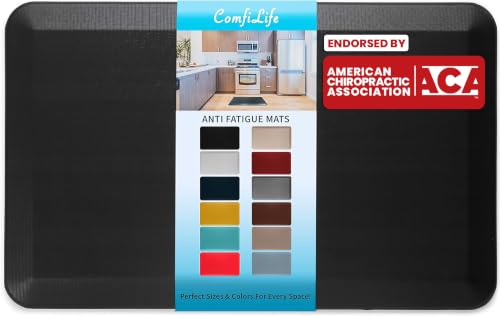 ComfiLife Anti Fatigue Floor Mat
 Gorilla Grip Cushioned Anti Fatigue Mat, 39 by 20
 Kangaroo Thick Ergonomic Anti Fatigue Mat, 20 by 32









