We independently review everything we recommend. When you buy through our links, we may earn a commission. As an Amazon Associate we earn from qualifying purchases.
Best Budget Internal SSD for PC and Laptop Upgrades
Find the best budget internal SSD for your PC or laptop. Compare five 1TB NVMe and SATA drives on speed, endurance, warranty, and fit before you buy.
The best budget internal SSD for most people is the WD Blue SN580 1TB. It is a PCIe Gen 4 NVMe drive in the compact M.2 2280 form factor, with sequential read and write speeds up to 4,150 MB/s, a 600 TBW endurance rating, and a five-year limited warranty. It covers everyday computing, gaming, and creative work without the cost of a flagship drive, and it runs cool enough for thin laptops and small desktop builds. All five drives use flash storage with no moving parts, so they run silent, resist shocks, and start up faster than any hard drive.
If the computer has no M.2 slot, the Samsung 870 EVO 1TB is the best budget SATA choice. It fits the standard 2.5-inch drive bay found in older laptops and desktops, reaches the practical limit of the SATA interface at up to 560 MB/s sequential read, and carries the same 600 TBW endurance rating and five-year warranty as the SN580. The Crucial P3 Plus 1TB offers the highest headline read speed here at up to 5,000 MB/s, while the Kingston NV2 1TB trades some speed for the lowest tier in the group. The Crucial MX500 1TB is a dependable SATA drive with a DRAM cache for steady long writes.
Every drive in this roundup holds 1TB of storage. That capacity is the sweet spot for a budget upgrade: it leaves room for an operating system, applications, and a game library or photo collection, without forcing constant cleanup.
How to Choose a Budget Internal SSD
Start with the slot in the computer. A modern desktop or laptop usually has at least one M.2 slot, which accepts the slim NVMe drives in this roundup. An older machine may have only a 2.5-inch SATA bay, which accepts the Samsung 870 EVO and the Crucial MX500. Check the manual or the specifications page for the exact model before ordering, and confirm whether the M.2 slot supports PCIe Gen 4, PCIe Gen 3, or SATA.
Capacity matters more than headline speed for most buyers. A 1TB drive holds the operating system, a full set of applications, and a useful amount of games or media, while a smaller drive fills up fast and forces difficult choices about what to keep.
Interface decides the ceiling. NVMe drives connect through PCIe lanes and reach sequential speeds several times higher than SATA drives, which top out near 560 MB/s. That gap shows up most clearly when copying large files, installing games, or loading large projects.
Endurance, expressed as TBW, describes how much data can be written to the drive over its warranty period. Keep at least a small amount of free space on any SSD so performance stays consistent as the drive fills. A higher TBW rating suits heavy use, such as video editing or frequent large downloads, while a lower rating is fine for browsing, office work, and light gaming.
The WD Blue SN580 1TB is the strongest all-round pick in this roundup. It pairs PCIe Gen 4 speed with a 600 TBW endurance rating, which is the highest endurance figure among the NVMe drives here, and it does so in a single-sided M.2 2280 design that fits laptops with limited clearance. Sequential read and write speeds both reach up to 4,150 MB/s, so large file transfers, game installs, and project loads move quickly.
For a gaming PC, the SN580 holds the operating system and a solid library of current titles. For a laptop upgrade, it replaces a slow hard drive or an older SATA SSD.
The Crucial P3 Plus 1TB posts the highest sequential read speed in this roundup, at up to 5,000 MB/s, with sequential writes up to 3,600 MB/s. It is a PCIe Gen 4 NVMe drive in the M.2 2280 form factor, built on 3D NAND, and it suits desktops and laptops that can use Gen 4 bandwidth. Large game files and media libraries load quickly, and the drive handles everyday multitasking with ease.
The trade-off sits in endurance. The P3 Plus carries a 220 TBW rating, which is lower than the SN580 and the SATA drives in this roundup. For typical home use, that rating still covers many years of normal writing. The P3 Plus carries a five-year limited warranty, and its budget-tier grouping makes it one of the most affordable ways to reach Gen 4 read speeds.
The Samsung 870 EVO 1TB is the reference SATA drive in this roundup, and it is the right pick for any computer without an M.2 slot. It uses the 2.5-inch SATA III interface, with sequential read speeds up to 560 MB/s and sequential write speeds up to 530 MB/s, which is close to the practical limit of SATA.
Endurance is a strong point. The 870 EVO carries a 600 TBW rating and a five-year limited warranty, matching the SN580 on both measures. That combination suits an older laptop that will serve for several more years, or a desktop that needs a reliable secondary drive for applications and documents.
The Kingston NV2 1TB is the lowest-tier NVMe option in this roundup, and it is aimed squarely at buyers who want M.2 speed at the smallest outlay. It is a PCIe Gen 4 x4 NVMe drive in the M.2 2280 form factor, with sequential read speeds up to 3,500 MB/s and sequential write speeds up to 2,100 MB/s. Those figures sit below the SN580 and the P3 Plus, yet they are still several times faster than any SATA drive, and they make a clear difference in boot times, game loading, and large file copies.
The NV2 uses a DRAM-less design with host memory buffer support, which keeps the cost down and the board simple. It fits thin laptops because it is single-sided, and it runs cool enough for compact builds without a dedicated heatsink. Endurance is rated at 320 TBW, and Kingston backs the drive with a three-year limited warranty.
The Crucial MX500 1TB is the second SATA drive in this roundup, and it earns its place with a DRAM cache and steady sustained performance. It is a 2.5-inch SATA III drive with sequential read speeds up to 560 MB/s and sequential write speeds up to 510 MB/s, built on Micron 3D NAND TLC. The DRAM cache helps during long write sessions and when the drive holds many small files, which keeps it responsive in a way that cache-less SATA drives sometimes are not.
Endurance is rated at 360 TBW, and Crucial covers the drive with a five-year limited warranty. The MX500 is grouped in the mid-range tier, and it is a strong alternative to the 870 EVO when the Samsung drive is unavailable.
Specs
Capacity: 1TB
Interface: SATA III 6 Gb/s
Form factor: 2.5 inch, 7 mm
Sequential read: up to 560 MB/s
Sequential write: up to 510 MB/s
NAND: Micron 3D NAND TLC
Endurance: 360 TBW
Warranty: 5-year limited warranty
Model: CT1000MX500SSD1
Tier: mid-range
Budget NVMe and SATA Drives Compared
The choice between NVMe and SATA comes down to the slot in the computer and the work the drive will do. NVMe drives in this roundup read at 3,500 MB/s or higher, while SATA drives top out near 560 MB/s, so NVMe wins clearly on large transfers and game loading.
Endurance also separates the field. The WD Blue SN580 and the Samsung 870 EVO lead at 600 TBW, followed by the Crucial MX500 at 360 TBW, the Kingston NV2 at 320 TBW, and the Crucial P3 Plus at 220 TBW.
Product
Interface
Sequential Read
Endurance
Warranty
Tier
WD Blue SN580 1TB
PCIe Gen 4 NVMe
up to 4,150 MB/s
600 TBW
5-year
budget
Crucial P3 Plus 1TB
PCIe Gen 4 NVMe
up to 5,000 MB/s
220 TBW
5-year
budget
Samsung 870 EVO 1TB
SATA III
up to 560 MB/s
600 TBW
5-year
mid-range
Kingston NV2 1TB
PCIe Gen 4 NVMe
up to 3,500 MB/s
320 TBW
3-year
budget
Crucial MX500 1TB
SATA III
up to 560 MB/s
360 TBW
5-year
mid-range
Frequently Asked Questions
Which budget internal SSD is best for a gaming PC?
The WD Blue SN580 1TB is the best budget pick for most gaming PCs. It is a PCIe Gen 4 NVMe drive with read and write speeds up to 4,150 MB/s, a 600 TBW endurance rating, and a five-year warranty, and it fits the M.2 slot found on modern gaming motherboards.
Can I use an NVMe SSD in an older laptop?
It depends on the laptop. An NVMe drive needs an M.2 slot that supports the NVMe protocol, and many laptops made before the M.2 standard became common have only a 2.5-inch SATA bay.
Is 1TB enough storage for a budget internal SSD?
For most users, 1TB is enough. It holds the operating system, applications, and a useful library of games or media, with room left over for new files.
Does a budget SSD need a heatsink?
Most budget SSDs in this roundup do not need an aftermarket heatsink. They are designed to run within safe temperatures in a normal desktop or laptop, and many motherboards include a heatsink or thermal pad for the M.2 slot.
Conclusion
The best budget internal SSD is the one that fits the computer, holds enough data, and lasts for years, and the WD Blue SN580 1TB does all three at a budget tier. Its Gen 4 speed, 600 TBW endurance, and five-year warranty make it the default choice for any desktop or laptop with an M.2 slot. Check the slot, pick the interface that fits, and choose the endurance rating that matches the workload.
For machines without an M.2 slot, the Samsung 870 EVO 1TB is the clear SATA pick, with the same endurance and warranty as the SN580 and software that makes migration simple.
E
Emubox Editorial Team
We compare specs, materials and verified owner reviews before a product earns a spot. Rankings are never paid.
Affiliate disclosure. As an Amazon Associate we earn from qualifying purchases at no extra cost to you. Prices accurate as of the date shown.
Best 2mm 70 cm portable antennas compared: telescopic radio antennas near 70 cm, with connectors, bands and collapsed sizes explained before you buy today.
Find the best thermostat setting for winter and summer, with energy-saving setbacks, humidity tips, and smart schedules for a comfortable home year-round.
The best affordable business computer monitors balance sharp text, eye comfort and lasting value. Compare four reliable office displays built for long workdays.
Looking for the best inexpensive HD TVs non smart? Compare five genuinely non-smart HD televisions with tuners, HDMI inputs and simple setup for any small room.

 WD Blue SN580 1TB NVMe SSD
 Crucial P3 Plus 1TB NVMe SSD
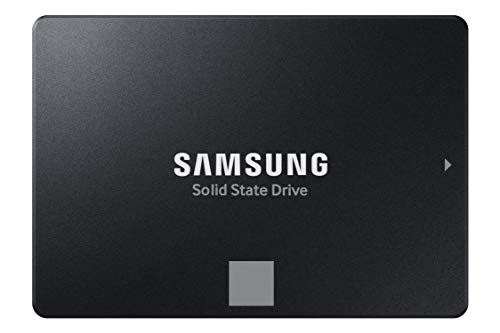 Samsung 870 EVO 1TB SATA SSD
 Kingston NV2 1TB NVMe SSD
 Crucial MX500 1TB SATA SSD









