Key takeaways
- Compare the 2 best grass seed picks for shady Georgia lawns, with bag size, coverage, and sowing guidance for north and south Georgia shade.
Shade is the quiet reason so many Georgia lawns thin out. A bag labelled for full sun will sprout, look hopeful for a few weeks, then fade under oaks, pines, and the north side of a house, leaving bare soil that weeds and moss are happy to claim. The real decision is not which brand looks most familiar on the shelf. It is whether the seed inside is built for low light, whether it suits the warm, humid summers of the Georgia transition zone, and whether the bag you buy covers the patchy ground you actually have.

This guide is for homeowners in Atlanta and north Georgia with fescue-friendly shade, for central Georgia yards caught between sun and tree cover, and for anyone reseeding the thin strip along a fence or under a big hardwood. Both picks below were chosen from the product name and specifications shown on their Amazon listings, and both are sun and shade mixes rather than full-sun-only seed.
Quick Picks
As an Amazon Associate we earn from qualifying purchases
| Product | Best for | Key spec from title |
|---|---|---|
| Scotts Turf Builder Grass Seed Sun & Shade Mix | Shady lawns that still get broken sun | 5.6 lb bag, covers up to 2,240 sq. ft. |
| Pennington Smart Seed Sun and Shade Grass Mix | Larger shady areas and overseeding | 7 lb bag, sun and shade grass mix |
How to Choose
Match the seed to your part of Georgia
Georgia sits in the transition zone, which means no single grass type wins everywhere. Tall fescue and other cool-season grasses handle shade best in Atlanta, Athens, and the north Georgia hills, where summers are hot but winters cool the soil enough for fescue to persist. Further south, toward Macon, Columbus, and Savannah, warm-season grasses dominate, and even shade-tolerant seed struggles once summer heat and humidity peak. Before buying, be honest about your county and your summers: a fescue-based sun and shade mix is the sensible default for shaded ground in the northern half of the state, while deep-south shade may need a different approach entirely, such as ground cover or mulch beds under the densest canopy.
Measure how much shade you really get
“Shade” covers everything from dappled light under a high oak canopy to near darkness on the north side of a two-storey house. Spend a day watching the lawn and count the hours of direct sun each bare patch receives. Most shade mixes need at least three to four hours of filtered or direct light to hold a lawn; under three hours, even the best seed will thin within a season. Note the difference between morning sun, which is gentle and useful, and deep shade cast by evergreens, which stays dark and dry all day. Pruning a few low limbs to lift the canopy often does more for a shady lawn than switching seed brands.
Read bag size against coverage
A bag that looks generous on the shelf can cover far less ground than a Georgia yard needs once you spread it at the rate the label calls for. Check the coverage figure on the listing before ordering, then measure the area you plan to seed, including the thin spots you intend to overseed rather than just the bare patches. Buying one bag too few leads to thin sowing, which is the most common reason new shade grass fails: seedlings spaced too far apart never knit into turf. For a full lawn renovation, work out the square footage first and order the bag size that covers it with a little to spare.
Check what is actually in the bag
Some grass seed is plain seed, while other bags combine seed with fertilizer and a soil improver. A coated or combination product can help germination on Georgia clay, which crusts over and dries fast in late summer, but it also means part of the bag weight is not seed at all. Read the listing title and description for those additions so you know what you are spreading. Plain seed gives you more seed per pound and suits gardeners who already fertilise separately; a seed-plus-fertiliser mix suits a quick autumn overseed where you want one pass over the lawn and nothing else to buy. If your soil is heavily compacted from foot traffic or construction, loosen the top few centimetres and rake in a thin layer of compost before sowing, because even the best-coated seed cannot root in soil that water cannot enter.
The 2 Best Options
Scotts Turf Builder Grass Seed Sun & Shade Mix
This is the straightforward pick for a Georgia lawn that is shady without being dark. Scotts builds this mix for lawns that get a blend of sun and shade through the day, which describes most suburban yards in Atlanta and north Georgia, where oaks and pines break the light rather than block it outright. The listing pairs the seed with fertilizer and a soil improver, so one application feeds germination and helps the seed settle on clay-heavy soil. At 5.6 lb with coverage up to 2,240 sq. ft., a single bag suits a modest front or back lawn, or a thorough overseed of a larger one.
Specs
- Sun & Shade Mix with fertilizer and soil improver
- Thrives in many conditions, per the Amazon listing title
- Bag size: 5.6 lb
- Coverage: up to 2,240 sq. ft.
Best for: Homeowners in north and central Georgia reseeding a partly shaded lawn in one pass.
Watch out for: The bag includes fertilizer and soil improver alongside the seed, so the seed weight per pound is lower than a plain-seed bag; check the spread rate for your area before ordering one bag for a large lawn.
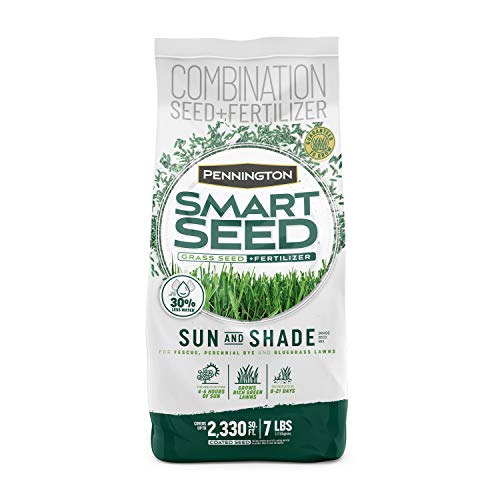
Pennington Smart Seed Sun and Shade Grass Mix
Pennington’s Smart Seed line is the pick to reach for when the shady area is bigger than a single patch. The 7 lb bag gives you more seed to work with, which matters when you are overseeding a whole back lawn under mature trees rather than fixing one bare strip. As a sun and shade mix it is aimed at the same in-between light that most Georgia shade lawns get: a few hours of sun, then tree cover for the rest of the day. It is a plain, practical choice for an autumn sowing, when cooler nights in north Georgia help cool-season seed establish before winter.
Specs
- Smart Seed Sun and Shade Grass Mix
- Bag size: 7 lb
- Mix type: sun and shade grass seed
Best for: Larger shady lawns and full-lawn overseeding in Atlanta and north Georgia.
Watch out for: This is a general sun and shade mix, not a dense-shade specialist, so patches that get under three hours of light a day may still thin out; lift the tree canopy or accept a thinner lawn in the darkest corners.
Which One Fits Your Situation
You live in Atlanta or north Georgia and the lawn is shady, not dark
Choose the Scotts Turf Builder Sun & Shade Mix. Its combination of seed, fertilizer, and soil improver suits a single autumn overseed on clay soil, and its coverage fits a typical suburban lawn. Sow when nights cool in early fall so the seed establishes before winter.
You have a large back lawn under mature trees
Choose the Pennington Smart Seed Sun and Shade Mix in the 7 lb bag. The larger bag covers more ground in one order, which keeps the sowing rate even across a big area instead of stretching one small bag too thin. Walk the lawn first and mark the darkest corners, where even this mix may struggle.
Your shade comes and goes through the day
Either mix works, because both are built for sun and shade rather than one extreme. Pick the Scotts bag if you also want the fertilizer and soil improver included, or the Pennington bag if you already feed your lawn separately and want more seed for the same job.
You are overseeding thin grass rather than starting bare soil
Choose the Pennington 7 lb bag for the extra seed, and mow the existing lawn short before sowing so the new seed reaches the soil. Water lightly and often until germination, then ease off as the seedlings root, and keep foot traffic off the area for the first few weeks.
Common Mistakes
- Sowing full-sun seed under trees and expecting it to survive the summer in shade.
- Spreading seed too thinly across a large area because one bag looked big enough on the shelf.
- Seeding in the heat of a Georgia summer, when cool-season shade grass germinates poorly and dries out.
- Skipping soil contact: seed scattered on top of thatch or leaf litter never roots properly.
- Watering once a day instead of keeping the top layer of soil damp until the seedlings are up.
Frequently Asked Questions
When is the best time to plant grass seed for shade in Georgia?
Early fall is the best window for shade seed in north and central Georgia, when soil is still warm and nights are cooling. Seed sown then germinates well and roots before winter. Spring is the second choice, but seedlings then face summer heat sooner, so fall sowing gives the lawn a stronger start.
Will tall fescue survive Georgia summers in shade?
Tall fescue survives best in the northern half of Georgia, where summers are hot but not as long or as humid as on the coast. In shade it stays cooler and holds moisture better than in full sun, which helps. In south Georgia, fescue struggles through summer whatever the light, and a warm-season lawn or shade-tolerant ground cover is often the better plan. Watering deeply but infrequently through July and August, rather than a daily sprinkle, helps fescue roots reach down into cooler soil and carry the lawn through the hottest weeks.
How much sun does shade grass seed need?
Most shade mixes need three to four hours of direct or filtered sun a day to maintain a lawn. Dappled light under high branches usually counts; deep shade under low evergreen limbs often does not. If a patch gets less than three hours, expect thin grass and plan for mulch or ground cover there instead.
Can I grow grass under pine trees in Georgia?
Grass under pines is one of the hardest spots in a Georgia yard, because the trees take the light, drink the water, and drop needles that smother seedlings. Clear the needles, water the area well, and sow a shade mix in fall. If the grass still thins after a season, a pine-straw bed is a better answer than another bag of seed.