Our Short List of 3

- Best for: A main vegetable plot where a natural, untreated wood frame matters more than extra depth.
- Footprint: 4 x 8 ft
- Depth: 10.5 in
- Growing area: 32 sq ft
- Material: untreated North American cedar
- Best for: A large backyard vegetable bed where deep-rooted crops need the full 24 inches of soil in a single enclosure.
- Footprint: 96 x 48 in (8 x 4 ft)
- Depth: 24 in
- Capacity: 478 gallons
- Material: metal

- Best for: Gardeners who want a tall metal enclosure they can rearrange into different shapes as the planting plan changes.
- Height: 17 in
- Configurations: 10 in 1 jumbo modular kit
- Material: metal
- Color: Pearl White
All 3 Picks at a Glance
| Product | Specs | Action |
|---|---|---|
| Greenes Fence Premium Cedar Raised Garden Bed |
| Check price on Amazon |
| Best Choice Products 8x4x2ft Outdoor Metal Raised Garden Bed |
| Check price on Amazon |
| Vego garden Raised Garden Bed Kit, 17″ Tall 10 in 1 Jumbo Modular |
| Check price on Amazon |
Key takeaways
- Compare 3 raised bed enclosures for November 2026: cedar, deep steel, and modular metal kits by footprint, depth, and assembly.
A raised bed only works as well as the frame that holds it together. Without a solid enclosure, soil creeps outward after every rain, edges collapse under a shovel, and the neat rectangle you planned turns into a low mound by midsummer. The enclosure also sets the depth of the bed, which decides whether shallow herbs thrive and deep-rooted vegetables stall. Choosing one means settling the material, the height, and the footprint before a single bag of soil arrives.
This guide suits backyard vegetable growers laying out a first serious plot, patio gardeners who need a contained bed that will not spread across paving, and anyone replacing a rotted timber edge with something that lasts longer. Each enclosure below comes from its own Amazon listing, and the dimensions, materials, and capacities quoted here are the ones those listings state.
Quick Picks
As an Amazon Associate we earn from qualifying purchases
| Product | Best for | Key spec from title |
|---|---|---|
| Greenes Fence Premium Cedar Raised Garden Bed | A classic wood bed for a main vegetable plot | 4 x 8 ft footprint, 10.5 in deep |
| Best Choice Products 8x4x2ft Outdoor Metal Raised Garden Bed | Deep-rooted vegetables in one large steel bed | 8 x 4 ft footprint, 24 in deep, 478-gallon capacity |
| Vego garden Raised Garden Bed Kit, 17″ Tall 10 in 1 Jumbo Modular | A tall modular metal bed that reconfigures to fit the yard | 17 in tall, 10-in-1 modular metal kit |
How to Choose
Match the depth to what you actually grow
Depth is the first number worth checking, because it cannot be fixed after the bed is filled. Leafy greens and most herbs manage in 8 to 10 inches of soil, while carrots, parsnips, and potatoes want far more room below the surface. A 10.5-inch cedar frame covers salads and herbs comfortably, a 17-inch modular kit opens the door to tomatoes and peppers, and a 24-inch steel bed handles the deepest root crops without a second stacked layer. Sketch the planting list first, find the deepest root on it, and let that crop set the minimum height for the enclosure.
Pick a material for your climate, not just the look
Cedar weathers to a soft grey and resists rot without chemical treatment, which appeals to gardeners who want an untreated frame around food crops. Powder-coated and galvanized steel shrug off damp winters and will not warp, split, or invite termites, though bare metal edges can feel sharp during assembly and the panels run hot in strong sun. Thin resin or plastic frames cost less and never rust, yet they flex under wet soil and rarely survive many seasons. In a wet climate, steel earns its keep; in a dry one, cedar ages gracefully.
Measure the footprint against your reach
A bed wider than four feet forces you to step into the soil to reach the middle, which compacts exactly the ground you built the bed to keep loose. Four feet across lets most adults tend the centre from either side without climbing in, while eight feet of length gives a full row of vegetables in one straight run. Narrower two-foot beds suit paths, fences, and balconies where only one side is reachable. Before ordering, lay string on the ground in the planned shape and walk around it with a watering can in hand.
Check how the corners join and what holds the walls straight
Long walls bow outward under wet soil unless something braces them. Cedar kits usually slot together with dovetail joints that need no tools, and taller stacks add posts for stiffness. Steel kits rely on bolts, wingnuts, or connecting rods, plus ground stakes and cross braces that stop the middle of a long side from bulging. Count the fixings in the listing and look for stakes or rods on any bed longer than six feet. A kit that assembles in minutes but omits bracing will cost far more time once it is full of soil.
The 3 Best Options
Greenes Fence Premium Cedar Raised Garden Bed
- Best for: A main vegetable plot where a natural, untreated wood frame matters more than extra depth.
- Footprint: 4 x 8 ft
- Depth: 10.5 in
- Growing area: 32 sq ft
- Material: untreated North American cedar
A main vegetable plot where a natural, untreated wood frame matters more than extra depth.
Cedar weathers to grey and will eventually need boards replaced; measure the spot first, because the 4-foot width assumes access from both long sides.
Cedar remains the default choice for a vegetable plot that should look like part of the garden rather than a piece of equipment. This Greenes Fence kit frames a 4 by 8 foot bed at 10.5 inches deep, giving 32 square feet of growing space in the standard shape most planting plans assume. Rough-sawn, untreated North American cedar carries the natural rot and insect resistance the wood is known for, and the dovetail corner joints slot together without tools. Made in the USA, it suits a gardener who wants a chemical-free frame and is happy to let the boards silver with age.
Watch out for: Cedar weathers to grey and will eventually need boards replaced; measure the spot first, because the 4-foot width assumes access from both long sides.
Best Choice Products 8x4x2ft Outdoor Metal Raised Garden Bed
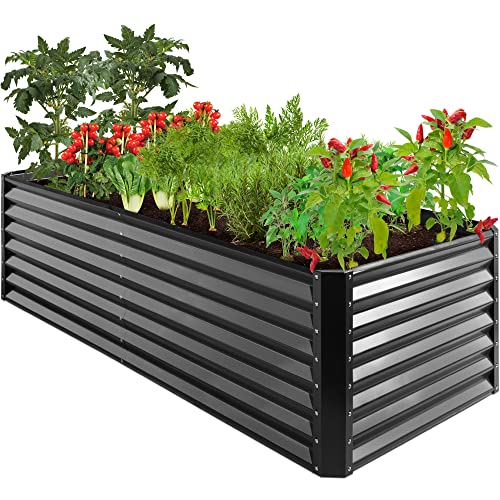
- Best for: A large backyard vegetable bed where deep-rooted crops need the full 24 inches of soil in a single enclosure.
- Footprint: 96 x 48 in (8 x 4 ft)
- Depth: 24 in
- Capacity: 478 gallons
- Material: metal
A large backyard vegetable bed where deep-rooted crops need the full 24 inches of soil in a single enclosure.
The open bottom means the bed must sit on soil or a surface where drainage is wanted; a 478-gallon fill takes a large volume of soil mix, so plan the delivery before assembly day.
When the planting list includes broccoli, beans, and bushy tomatoes, depth stops being a luxury and becomes the deciding factor. This Best Choice Products steel bed stands 24 inches tall across a 96 by 48 inch footprint, holding a listed 478 gallons of soil in one open-bottom box. That volume supports deep root growth and holds moisture longer between waterings than a shallow frame. The grey metal panels form a deep root planter box for vegetables, flowers, herbs, and succulents, and the open bottom keeps the bed connected to the native soil below for drainage and worms.
Watch out for: The open bottom means the bed must sit on soil or a surface where drainage is wanted; a 478-gallon fill takes a large volume of soil mix, so plan the delivery before assembly day.
Vego garden Raised Garden Bed Kit, 17″ Tall 10 in 1 Jumbo Modular
- Best for: Gardeners who want a tall metal enclosure they can rearrange into different shapes as the planting plan changes.
- Height: 17 in
- Configurations: 10 in 1 jumbo modular kit
- Material: metal
- Color: Pearl White
Gardeners who want a tall metal enclosure they can rearrange into different shapes as the planting plan changes.
Modular panels mean more joints to check during assembly; confirm the configuration you want fits the space, because the same kit can form shapes with very different footprints.
Modular kits answer a different question from fixed rectangles: what if the bed needs to change shape next season. This Vego garden kit rises 17 inches tall and rearranges into ten configurations, so the same panels can form a long run, a square, or a split layout as the garden plan changes. The metal planter box suits vegetables, flowers, and herbs, and the 17-inch height sits in the middle ground that covers most crops without demanding the soil volume of a two-foot bed. Pearl White keeps the frame bright against green foliage and reads cleanly on a patio or beside a house wall.
Watch out for: Modular panels mean more joints to check during assembly; confirm the configuration you want fits the space, because the same kit can form shapes with very different footprints.
Which One Fits Your Situation
You are planting a first vegetable garden
Start with the Greenes Fence cedar bed. Its 4 by 8 foot shape matches most beginner planting plans row for row, the 10.5-inch depth covers salads, herbs, beans, and peppers, and tool-free dovetail assembly means the frame goes up before enthusiasm fades. Cedar also forgives a beginner: it needs no treatment and looks right even if the planting inside is still learning.
You grow deep-rooted vegetables every year
Choose the Best Choice Products 8x4x2ft steel bed. Carrots, parsnips, and potatoes all use the full 24 inches, and the 478-gallon capacity keeps soil moisture steadier through hot weeks than a shallow frame can. The single large rectangle also simplifies crop rotation, since each half of the bed can rest or rotate independently.
Your garden layout changes from season to season
Pick the Vego garden 17-inch modular kit. Ten configurations from one set of panels let you split a long bed into two squares for succession planting, or stretch it out again when a single crop takes over. The 17-inch height covers most vegetables, so the flexibility costs little in growing depth.
You need the bed to look good beside the house
The Vego kit in Pearl White or the Greenes cedar bed both earn their place near a patio. White metal reads tidy against a house wall, while cedar softens into the planting around it. The grey steel bed is the workhorse of the three, better placed where growing space matters more than appearance.
Common Mistakes
- Buying a bed wider than four feet when only one side is reachable, then compacting the soil by stepping in to tend the middle.
- Choosing a shallow frame for carrots or potatoes and discovering the roots hit the bottom halfway through the season.
- Filling a deep bed with topsoil alone instead of a mix that drains, which leaves the lower half waterlogged.
- Placing an open-bottom bed on paving or weed fabric that blocks drainage and the worms that keep soil alive.
- Skipping the stakes and cross braces on a long steel bed, then watching the walls bow outward once the soil is wet.
Frequently Asked Questions
How deep should a raised bed enclosure be?
Eight to ten inches suits leafy greens and herbs, twelve to eighteen inches covers tomatoes, peppers, and beans, and twenty-four inches suits carrots, parsnips, and potatoes. Pick the depth from the deepest-rooted crop on your planting list rather than from the cheapest frame.
Does a metal raised bed overheat plants in summer?
Metal panels warm in direct sun, and the soil near the edges dries faster than the centre. Mulch the surface, water the edges as well as the middle, and place the bed where it gets afternoon shade if your summers run hot.
Is untreated cedar safe for growing vegetables?
Yes, untreated cedar is widely used around food crops precisely because it relies on the wood’s own resistance to rot and insects rather than chemical treatment. It will weather to grey and eventually need boards replaced, which is the trade for keeping treatments out of the soil.
Can I place a raised bed enclosure directly on grass?
Yes, an open-bottom frame can sit on grass, but smother the turf first with cardboard or remove it so grass does not grow up through the soil. Level the ground under the frame, or the walls will sit unevenly and gaps will open at the corners.