Our Short List of 3
All 4 Picks at a Glance
| Product | Specs | Action |
|---|---|---|
 1. Kodak Ektar H35 Half Frame Film Camera | Check price on Amazon | |
 2. Kodak Ektar H35N Half Frame Film Camera | Check price on Amazon | |
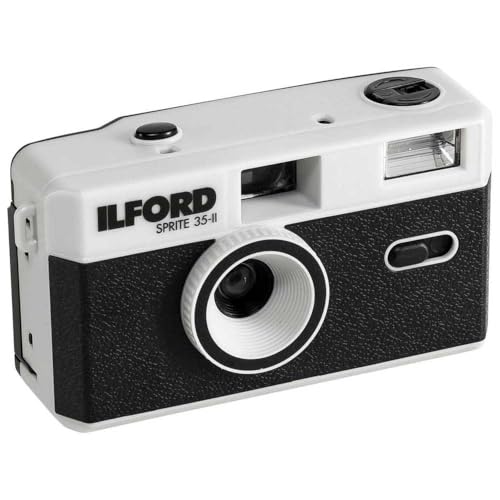 3. Ilford Sprite 35-II Reusable Film Camera | Check price on Amazon | |
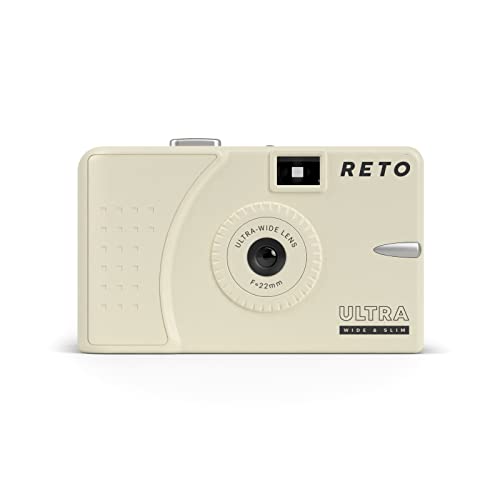 4. RETO Ultra Wide and Slim 35mm Film Camera | Check price on Amazon |
Key takeaways
- Compare the best easy to use film cameras for beginners, from half-frame Kodak models to the Ilford Sprite and RETO camera, with clear specs.
Film photography looks complicated from the outside, with manual dials, light meters, and focusing rings on older cameras. The good news is that a whole category of modern 35mm cameras removes nearly all of that. The best easy to use film cameras are focus free, load like a simple point and shoot, and ask the photographer to do little more than wind the film, frame the shot, and press the shutter button.
This guide covers four reusable 35mm cameras built around that simple idea. Each one uses standard 35mm film, each one avoids menus and settings that slow a beginner down, and each one can be reloaded roll after roll instead of being thrown away after a single use. The differences come down to frame format, lens width, flash design, and whether the camera needs a battery at all, and those differences are explained in plain language below.
As an Amazon Associate, we earn from qualifying purchases.
How to Choose an Easy to Use Film Camera
The first decision is frame format. Most simple cameras in this guide shoot the full 35mm frame, so a roll with 36 exposures gives about 36 finished photos in the familiar rectangular shape. Half-frame cameras split each frame in two, so the same roll yields about twice as many photos. Half-frame shooting lowers the cost per photo and suits a diary style of shooting, where pairs of related images sit side by side. Full-frame shooting gives a larger negative for each photo, which is helpful if large prints are the goal.
The second decision is the lens. Every camera here is focus free, which means the lens is fixed and subjects stay acceptably sharp from about one meter away onward. A standard lens around 31mm suits everyday scenes, portraits of friends at arm’s length, and travel snapshots. A wider 22mm lens fits more of a room, a street, or a group into the frame without stepping back, although faces close to the edges can look stretched. Beginners who mostly shoot people often prefer the standard lens, while beginners who shoot places and groups often prefer the wide lens.
Flash matters more than many first-time buyers expect. Film is far less sensitive in dim light than a phone camera, so indoor parties, restaurants, and evening streets usually need flash. Three of the cameras here have a built-in flash powered by a single AAA battery, and turning the flash on is a simple switch or ring movement. One camera has no flash and no battery at all, which makes it the simplest of the group in daylight and the most limited after dark.
Film choice keeps the experience easy as well. A color film rated at ISO 400 is the forgiving all-purpose option for this type of camera, because it handles bright sun, cloud, and flash-lit rooms without any change in settings. Slower film needs brighter light, and faster specialty film is better saved for later experimentation. Loading is similar across the group: open the back, drop in the cassette, pull the leader across to the take-up spool, close the back, and wind until the counter shows the first frame.
Finally, consider size and ongoing use. All four cameras are small, light, plastic-bodied designs made to be carried daily rather than stored carefully. A reusable camera also creates less waste than a single-use camera and allows a new roll to be loaded in a minute or two, so the same camera can cover a whole year of birthdays, trips, and ordinary weekends.
1. Kodak Ektar H35 Half Frame Film Camera
The Kodak Ektar H35 is the easiest starting point for a beginner who wants the lowest cost per photo. Its half-frame format records two vertical images on each standard frame, so a roll listed as 36 exposures produces around 72 photos. That longer roll gives a new photographer far more room to practice, make mistakes, and learn what film looks like without finishing the roll in a single afternoon.
Operation could hardly be simpler. The lens is focus free, the shutter fires at a single speed, and the built-in flash is switched on by turning the silver ring around the lens. Film transport is a manual wind and rewind system, and the whole camera runs on one AAA alkaline battery that powers only the flash. The body weighs about 100 grams, so it rides in a jacket pocket without complaint, and the retro two-tone styling is available in several colors, with black being the listing covered here.
The trade-offs follow from the half-frame design. Each individual image uses half the film area, so very large prints show more grain than full-frame photos, and the vertical default orientation takes a little getting used to for photographers who think in horizontal frames. For social sharing, small prints, and a visual diary style, neither point is a serious obstacle.
Who It Suits
The H35 suits beginners who want maximum practice from every roll, students on a film budget, and anyone who likes the paired-frame storytelling style. It is less suited to photographers planning large wall prints from individual frames.
2. Kodak Ektar H35N Half Frame Film Camera
The Kodak Ektar H35N keeps the same friendly half-frame formula as the H35 and adds a small set of creative extras for beginners who expect to grow. It is described by the maker as an advanced version of the H35, and the upgrades are a coated lens with one glass element, a built-in star filter, a bulb shutter mode, and a tripod socket. None of these additions complicate normal daylight shooting, which remains focus free and fully point and shoot in character.
The coated lens uses one glass element and one aspherical acrylic element, in place of the all-acrylic lens on the standard model. The star filter turns bright points of light, such as street lamps and reflections on water, into four-beam flares, and it can be switched in or out as the scene demands. Bulb mode holds the shutter open while the button is pressed, which, paired with the tripod socket, opens up simple night and light-trail experiments that the basic model cannot attempt.
In everyday use the H35N behaves exactly like its simpler sibling. It still doubles the number of photos per roll, still uses one AAA battery for the built-in flash, and still weighs close to the same at about 110 grams, with a part-aluminium body finish in place of plain ABS. A beginner can ignore every extra feature on day one and explore them one at a time over later rolls.
Who It Suits
The H35N suits beginners who want the economy of half-frame shooting plus room to experiment with night scenes and light effects later. Photographers who want the absolute simplest camera and nothing more can save the extra features and choose the standard H35 instead.
3. Ilford Sprite 35-II Reusable Film Camera
The Ilford Sprite 35-II takes the opposite approach to the Kodak half-frame models: instead of doubling frames, it shoots the ordinary full 35mm frame with a standard-width lens. That makes it the most familiar option in this guide for a beginner who wants each photo to look like a classic snapshot, with no vertical pairing and no adjustment in thinking when the prints or scans come back from the lab.
The lens is a 31mm optical lens rated at F9, and it is focus free from one meter onward, so a subject only needs to be a normal conversational distance away. A built-in flash covers indoor and evening use, and a wrist strap is included in the box, which is a small but practical touch on a light plastic camera that is easy to fumble. Loading follows the usual reusable pattern, and the camera accepts any standard 35mm cassette, color or black and white.
Ilford is best known for black and white film, and the Sprite 35-II pairs naturally with that tradition, although nothing about the camera restricts it to monochrome stock. Beginners who plan to shoot a mix of color snapshots and black and white experiments get a neutral, no-nonsense tool here. The design is deliberately plain, with no extra modes, filters, or effects to learn.
Who It Suits
The Sprite 35-II suits beginners who want straightforward full-frame photos, a standard lens view, and a camera with nothing extra to learn. It also suits anyone planning to shoot a lot of black and white film. It offers fewer creative extras than the H35N and fewer frames per roll than either half-frame Kodak.
4. RETO Ultra Wide and Slim 35mm Film Camera
The RETO Ultra Wide and Slim removes the last remaining complication found on the other cameras here: the battery. This is a daylight camera with no flash and no electronics, so there is nothing to charge, nothing to replace, and nothing to switch on. The photographer loads a roll, winds the film, frames the scene, and presses the shutter. For a complete beginner, that mechanical simplicity can be the difference between carrying the camera and leaving it at home.
Its defining feature is the 22mm ultra-wide lens, which takes in a far broader view than the Sprite 35-II and matches the width of the half-frame Kodak lenses while recording a full frame. Groups of friends, narrow interiors, markets, and city streets all fit without backing up. The camera is also the lightest in this guide at under 70 grams, and its slim rectangular body slips into a shirt pocket. The shutter speed is fixed and the lens is focus free, so exposure and sharpness are handled entirely by the film and the daylight.
The limits are clear and worth stating plainly. Without a flash, indoor and night photos on ordinary film will usually come out dark, so this camera belongs to daytime walks, beach trips, festivals, and bright travel days. Faces placed very close to the frame edges can also look stretched by the wide lens, so keeping people near the center gives more natural portraits.
Who It Suits
The RETO Ultra Wide and Slim suits beginners who shoot mostly outdoors, want the widest possible view, and like the idea of a camera that never needs a battery. Anyone who expects to shoot indoors or at night should choose one of the flash-equipped models instead.
Frequently Asked Questions
1. What film should a beginner load in these cameras?
A standard 35mm color film rated at ISO 400 is the safest first choice for all four cameras. It copes with sunshine, overcast days, and flash-lit indoor scenes without any settings to change. Black and white film at a similar speed works just as easily, especially in the Ilford Sprite 35-II. Slower film needs brighter light than these simple cameras can measure, so it is better saved for a later, more adjustable camera.
2. How many photos does one roll of film give?
A full-frame camera such as the Sprite 35-II or the RETO model gives about 24 or 36 photos, matching the exposures marked on the roll. The half-frame Kodak H35 and H35N record two images on each frame, so a 36-exposure roll gives around 72 photos and a 24-exposure roll gives around 48. Half-frame images are vertical by default and use half the film area each.
3. Do these cameras need batteries?
Three of them use a single AAA battery, and only to power the built-in flash: the Kodak Ektar H35, the Kodak Ektar H35N, and the flash-equipped models generally will still fire the shutter without one in daylight. The RETO Ultra Wide and Slim needs no battery at all because it has no flash or electronics. Carrying one spare AAA in the camera bag is enough backup for a flash model.
4. Where do the photos get developed?
Any photo lab that processes 35mm film can develop these rolls, and many labs also scan the negatives and return digital files alongside or instead of prints. The photographer drops off or mails the finished roll, then rewinds it fully into the cassette before opening the camera back. Half-frame rolls should be mentioned when ordering scans, since the lab needs to know the frames are paired.
Final Verdict
Every camera in this guide proves the same point: film does not have to be difficult. The right choice depends on how and where a beginner shoots. The Kodak Ektar H35 is the best default recommendation, because half-frame shooting doubles every roll, the flash covers day and night, and the operation is as simple as wind, aim, and press. The Kodak Ektar H35N is the pick for a beginner who wants that same economy plus a glass lens element, a star filter, and bulb mode for later experiments.
For a classic full-frame snapshot, the Ilford Sprite 35-II is the calm, standard choice, with a natural 31mm view and a built-in flash. For bright outdoor days and the widest view in the smallest body, the RETO Ultra Wide and Slim removes even the battery from the equation. Whichever model is chosen, pairing it with ISO 400 film and a reliable lab turns a first roll into an easy, enjoyable introduction to film photography.
Product and ASIN Reference
| Product | ASIN |
|---|---|
| Kodak Ektar H35 Half Frame Film Camera | B0B1J1D5G7 |
| Kodak Ektar H35N Half Frame Film Camera | B0CBBTB1D3 |
| Ilford Sprite 35-II Reusable Film Camera | B08XSX6Z9J |
| RETO Ultra Wide and Slim 35mm Film Camera | B09QSH1J1C |